

Start here
Start With the Serving Size
Next
The Numbers That Matter Most
Then
How to Use Percent Daily Value
Going deeper
Decoding the Ingredient List
Final step
Front-of-Package Claims: What They Mean (and Don't)
Start With the Serving Size
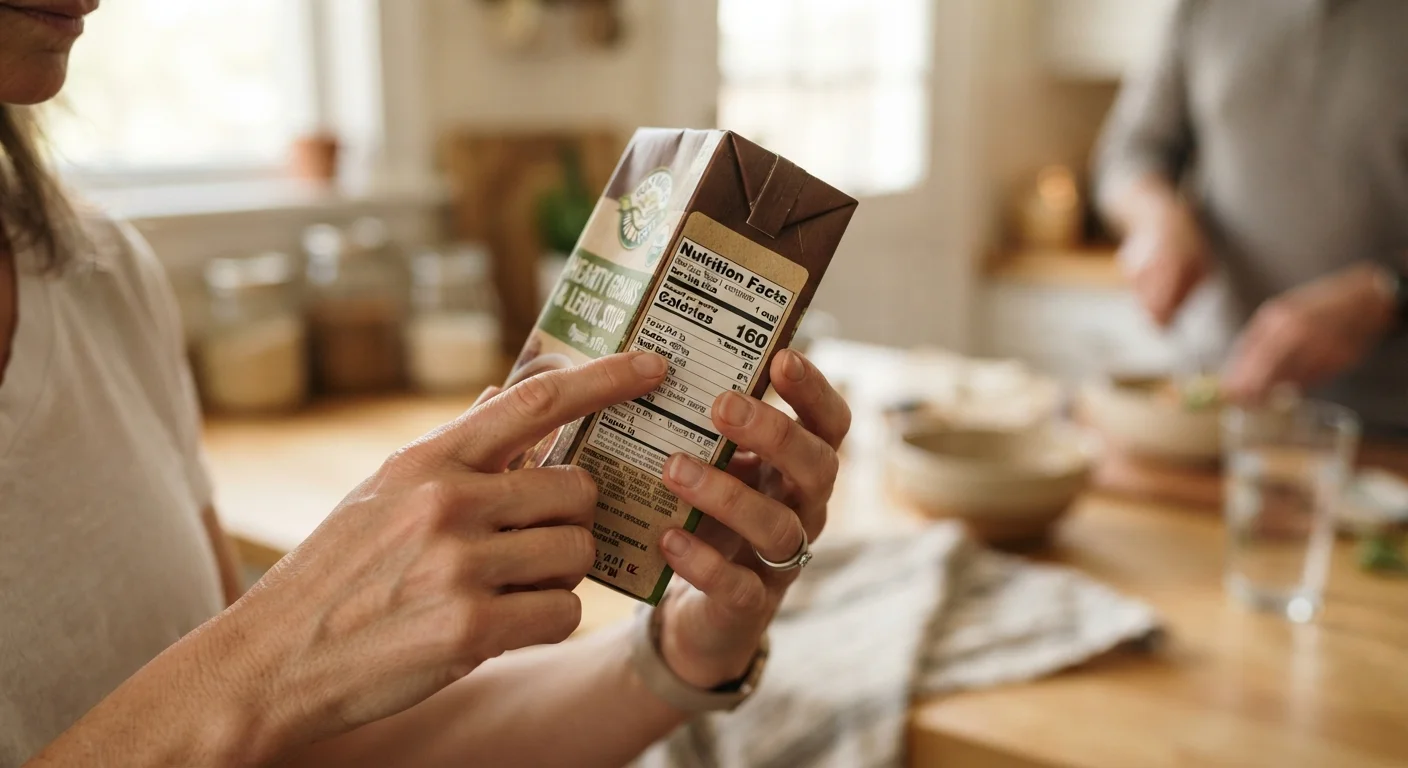
Every number on the Nutrition Facts panel — calories, sodium, fat, everything — is calculated for one serving, not the whole package. The serving size is printed at the very top of the panel, and it controls everything below it.
Here's where many people get tripped up: a bag of chips might list 150 calories per serving, but the bag contains three servings. Eat the whole bag and you've consumed 450 calories. The FDA updated the Nutrition Facts format (fully in effect since 2020) to make serving sizes more realistic, reflecting amounts people actually eat in one sitting rather than idealized portions.
Before reading any other number, ask: How much is one serving, and how many servings am I actually eating? That single habit will make every label you read more honest and useful. For a broader walkthrough of the entire label, see Understanding Food Labels From Start to Finish.
The Numbers That Matter Most
Once you know your serving size, four nutrients deserve your regular attention:
- Calories — the total energy per serving. The label now displays this in a larger, bolder font to make it easier to find.
- Saturated fat — dietary guidelines recommend limiting this. It appears as a sub-line under total fat.
- Sodium — many Americans consume more than the generally recommended limit of 2,300 mg per day. Processed and packaged foods are major contributors.
- Added sugars — listed separately from total sugars since the 2020 update. The Dietary Guidelines for Americans suggest keeping added sugars below 10% of total daily calories.
You don't need to track every single nutrient at every meal. Focusing consistently on these four gives you a practical, research-grounded filter for most everyday food decisions. For a plain-language deep-dive into what these numbers are really communicating, What Nutrition Labels Are Actually Telling You is a useful next read.
How to Use Percent Daily Value
The right-hand column on the Nutrition Facts panel — labeled %DV — is one of the most practical tools on the label, and one of the most ignored. It answers a simple question: is this amount of a nutrient a little or a lot for one day?
The FDA's rule of thumb is straightforward: 5% DV or less is low; 20% DV or more is high. That applies to any nutrient. A cereal with 35% DV of sodium per serving is delivering more than a third of a day's worth of sodium in one bowl — that's high. A yogurt with 20% DV of calcium is a meaningful source of that mineral — also high, but in a nutrient you generally want more of.
%DV is based on a 2,000-calorie daily diet for an average adult. Your personal targets may vary, but the scale remains a reliable relative guide regardless. For a detailed explanation of how these percentages are calculated and applied, What Percent Daily Value Actually Means on a Food Label covers the topic thoroughly.
Quick Comparison Shortcut at the Store
When choosing between two similar products, use %DV to compare them in seconds. Look at sodium and added sugars — lower %DV generally means a better fit for most people. Then check fiber and calcium — higher %DV is usually preferable for those nutrients. You don't need to do any math; the label does it for you.
Decoding the Ingredient List
The ingredient list appears below the Nutrition Facts panel and follows one firm rule under U.S. law: ingredients are listed in descending order by weight. Whatever appears first is present in the largest quantity. The first three to five ingredients are essentially the product's identity.
A few practical patterns to recognize:
- If sugar (or any sugar alias — corn syrup, cane juice, dextrose, maltose) appears in the first two or three positions, the product is heavily sweetened.
- A very long ingredient list with many chemical-sounding names often indicates a highly processed food, though length alone isn't a definitive quality measure.
- Whole foods like "whole wheat flour" or "oats" near the top suggest a less refined base.
Some ingredient names are genuinely confusing — words like "enriched," "fortified," or "hydrolyzed" carry specific meanings. Our Glossary of Confusing Food Label Terms defines the most common ones in plain English.
Front-of-Package Claims: What They Mean (and Don't)
The front of a package is prime marketing real estate. Terms like natural, wholesome, light, clean, and simple are crafted to create positive impressions. Some of these terms have regulatory definitions; many do not.
- "Low sodium" — FDA-regulated. Must contain 140 mg or less per serving.
- "Reduced fat" — FDA-regulated. Must contain at least 25% less fat than the standard version.
- "Natural" — Not formally defined by the FDA for nutritional purposes. Treat it as a marketing term.
- "Made with whole grain" — No regulated minimum. A product could contain a small percentage of whole grain and still carry this label.
The most reliable information on a package is always the Nutrition Facts panel and the ingredient list — both regulated and standardized. Front-of-package claims are a starting point for curiosity, not a substitute for reading the label itself.
This article is for general informational and educational purposes only and is not a substitute for personalized dietary advice. Consult a registered dietitian or qualified healthcare professional for guidance specific to your health needs.
Frequently Asked Questions
Start with the serving size at the very top of the Nutrition Facts panel. Every calorie count and nutrient number on the label is based on that serving amount, not the whole package. If you eat more than one serving, multiply accordingly.
%DV shows how much of a nutrient one serving contributes toward a general daily target for an average adult. A %DV of 5% or less is considered low; 20% or more is considered high. Use it to compare products quickly.
Yes — U.S. regulations require ingredients to be listed in descending order by weight. The first ingredient is present in the largest amount, so the top three to five ingredients reveal what a product is mostly made of.
Total sugars include both naturally occurring sugars (like those in fruit or milk) and sugars added during processing. Added sugars are only the ones manufacturers put in — this distinction matters because added sugars provide calories without additional nutrients.
Not in a strict nutritional sense. The FDA has not established a formal regulatory definition for 'natural,' so its use on packaging is not a meaningful indicator of a food's nutritional quality or ingredient purity.
Most packaged foods sold in the United States are required to display a Nutrition Facts panel under FDA regulations. Some small businesses and certain products like plain coffee or spices may have exemptions, but the vast majority of grocery items you'll encounter will carry one.
The content on this site is for informational purposes only and is not a substitute for professional advice. Always consult a qualified professional for guidance specific to your situation.