

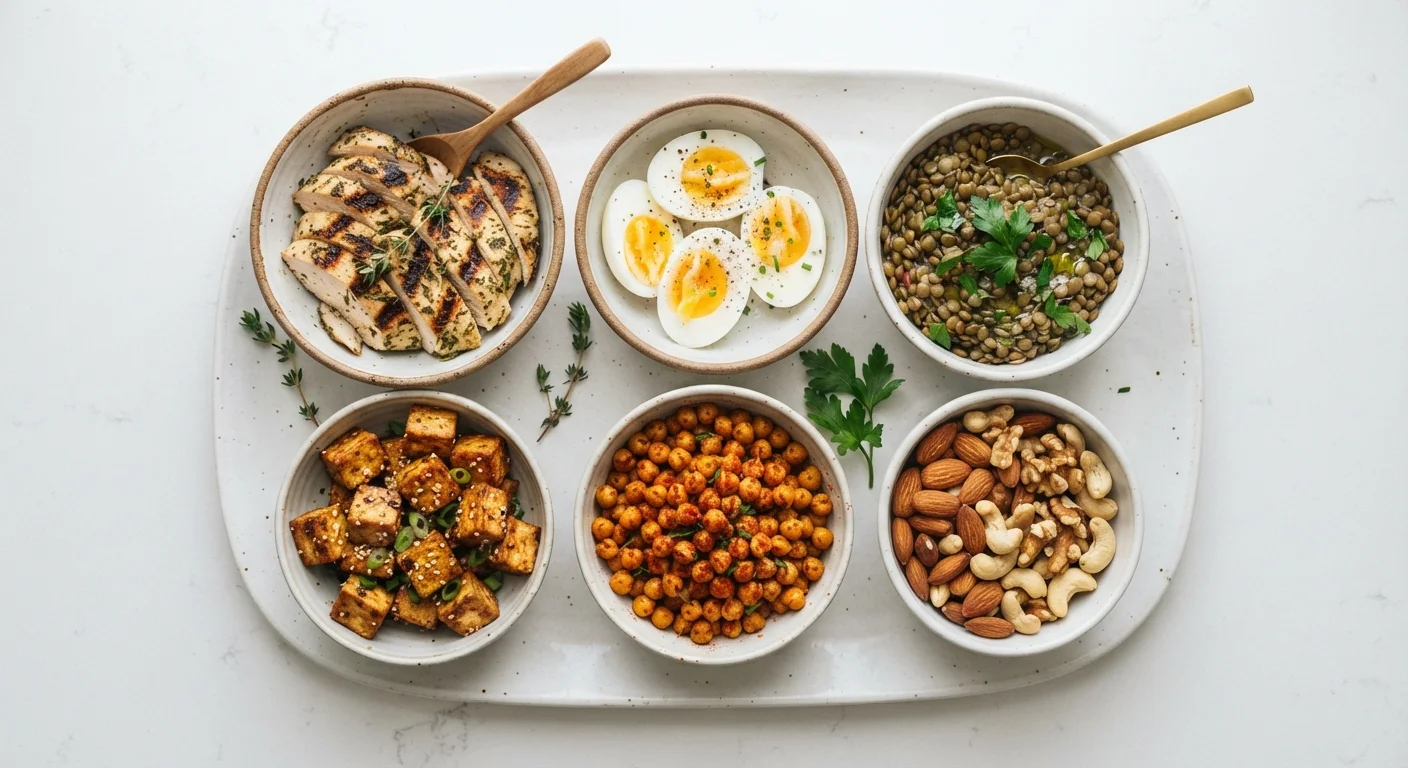
Our Verdict
Animal proteins offer a reliable complete amino acid profile and high digestibility, making them straightforward to incorporate. Plant proteins require a bit more planning but deliver meaningful nutritional benefits alongside fiber and phytonutrients. For most people, a diet that thoughtfully includes both — or strategically combines varied plant sources — provides the best nutritional foundation.
| Best for | Recommended |
|---|---|
| Those seeking the most digestible, complete protein per serving | Animal Proteins |
| Those prioritizing fiber, phytonutrients, and lower saturated fat alongside protein | Plant Proteins |
| Vegetarians, vegans, or anyone reducing animal product consumption | Plant Proteins (strategically varied) |
| People who want practical flexibility without overhauling their eating pattern | Mixed approach (both sources) |
What Makes a Protein 'Complete' or 'Incomplete'?
Proteins are built from amino acids — 20 in total, nine of which are classified as essential because the body cannot synthesize them on its own. A protein source is called complete when it provides all nine essential amino acids in adequate proportions. Most animal proteins — meat, poultry, fish, eggs, and dairy — meet this definition naturally.
Plant proteins are more varied. Soybeans and quinoa are notable exceptions that qualify as complete proteins. Most other plant sources — legumes, grains, nuts, seeds — are technically incomplete, meaning they are lower in one or more essential amino acids. However, this doesn't make them nutritionally inadequate. Eating a variety of plant foods across the course of a day — say, rice and beans, or whole-grain bread with peanut butter — covers the full spectrum of essential amino acids. Rigid same-meal combining is no longer considered necessary by most nutrition researchers.
For a broader look at how protein fits into your overall eating pattern, see how protein and carbs each anchor your meals.
Digestibility: How Much Protein Actually Gets Absorbed?
The amount of protein listed on a nutrition label isn't necessarily the amount your body uses. Digestibility — how efficiently the gut breaks down and absorbs a protein — varies significantly between sources. A widely used research measure, the PDCAAS and the newer DIAAS, account for both amino acid profile and absorption efficiency.
Animal proteins — particularly eggs, dairy, and lean meats — typically score at or near the top of these scales. Many plant proteins score lower, partly because plant cell walls and naturally occurring compounds like phytates and tannins can limit absorption. Cooking, soaking, and fermenting can meaningfully improve plant protein digestibility. For example, cooked lentils are significantly more digestible than raw, and fermented soy products like tempeh outperform unfermented forms.
| Plant Proteins | Animal Proteins | |
|---|---|---|
| Amino acid completeness | Mostly incomplete (soy & quinoa are exceptions) | Complete in a single source |
| Digestibility (DIAAS/PDCAAS) | Generally lower; improved by cooking/fermenting | Generally higher across most sources |
| Saturated fat | Typically low | Varies; can be significant in red/processed meat |
| Fiber content | High in legumes and whole-food sources | None |
| Vitamin B12 | Not naturally present | Readily available |
| Iron & zinc bioavailability | Non-heme; lower absorption | Heme iron; higher absorption |
| Phytonutrients & antioxidants | Abundant | Minimal to none |
This doesn't mean plant proteins are ineffective — it means portion context matters. Someone relying primarily on plant proteins may benefit from eating slightly more volume overall to meet the same usable protein intake.
What Else Comes Along for the Ride?
Protein never travels alone in food. The nutritional package surrounding it often matters as much as the protein content itself.
Animal proteins frequently come with vitamin B12 (found almost exclusively in animal foods), heme iron (highly bioavailable), zinc, and complete amino acids — advantages worth noting. Fatty fish adds omega-3 fatty acids. However, many animal protein sources also carry saturated fat and dietary cholesterol, and processed or cured meat products introduce sodium and preservatives into the equation. Understanding that spectrum is explored further in the real difference between whole and processed foods.
Plant proteins are packaged with dietary fiber, antioxidants, and phytonutrients largely absent from animal foods. Legumes, for instance, deliver both protein and slow-digesting carbohydrates that support steady blood sugar. Plant sources also tend to be lower in saturated fat. The trade-off: non-heme iron and zinc from plants are less readily absorbed, and B12 is not present — a meaningful consideration for anyone eating exclusively plant-based.
Vitamin B12 and Plant-Based Diets
Vitamin B12 is found almost exclusively in animal products. People following a fully plant-based diet are at meaningful risk of deficiency over time, which can affect nerve function and red blood cell production. If you eat little or no animal protein, talk with a healthcare provider or registered dietitian about whether a B12 supplement is appropriate for you — this is one instance where food variety alone may not be sufficient.
These trade-offs are part of why dietary pattern and variety — not a single food or category — ultimately drive health outcomes. For context on broader eating approaches, see how popular diet patterns compare.
Practical Guidance for Everyday Meals
Neither plant nor animal protein automatically wins. What matters is how they're incorporated into a realistic, sustainable diet.
- If you eat animal products: Prioritize less-processed forms — eggs, fish, lean poultry, plain dairy — over heavily cured or processed meats. Variety across sources brings a wider nutrient profile.
- If you rely primarily on plants: Rotate your protein sources — lentils, chickpeas, black beans, edamame, tofu, tempeh, nuts, seeds — to naturally cover your amino acid needs. Consider whether a B12 supplement is appropriate; this is worth discussing with a healthcare provider.
- If you eat both: Use plant proteins as a primary base and animal proteins as a complement rather than a centerpiece, a shift that research broadly associates with positive dietary patterns.
When evaluating packaged protein products — powders, bars, meat alternatives — check the nutrition label carefully. What to look for when comparing two packaged foods walks through exactly how to do that without getting lost in the numbers.
This article is for general informational and educational purposes only and is not a substitute for personalized medical or nutritional advice. Consult a qualified healthcare professional or registered dietitian for guidance specific to your health needs.
The content on this site is for informational purposes only and is not a substitute for professional advice. Always consult a qualified professional for guidance specific to your situation.