

Our Verdict
Mediterranean and plant-based eating patterns have the deepest body of supportive research, particularly for heart health and long-term disease prevention. Low-carb diets can offer meaningful short-term benefits, especially for blood sugar management, but require careful planning to maintain nutritional balance. The most important factor in any diet's success is how well it fits a person's life, preferences, and health context.
| Best for | Recommended |
|---|---|
| Those seeking a flexible, well-researched approach to long-term health | Mediterranean pattern |
| Those prioritizing environmental impact alongside personal health | Plant-based pattern |
| Those managing blood sugar or seeking structured carbohydrate reduction | Low-carb pattern (with medical guidance) |
| Those wanting a flexible framework without strict elimination rules | DASH or flexitarian approach |
What We Mean by 'Diet Pattern'
A diet pattern isn't a rulebook — it's a broad description of how someone consistently eats over time. Unlike short-term diets, eating patterns reflect habitual food choices and are what most large-scale nutrition research actually studies. Understanding the distinctions between popular patterns helps cut through marketing noise and focus on what the evidence genuinely supports.
For context on separating fact from fiction in nutrition science, see our piece on common nutrition myths and what evidence actually shows.
| Mediterranean | Plant-Based | Low-Carb / Keto | DASH | Flexitarian | |
|---|---|---|---|---|---|
| Core emphasis | Whole foods, olive oil, fish | Fruits, vegetables, legumes | Fats and proteins, minimal carbs | Low sodium, fruits, vegetables | Mostly plants, some meat |
| Eliminates food groups? | No | Yes (animal products, in strict form) | Yes (most carbohydrates) | No | No |
| Strength of long-term evidence | Strong | Moderate to strong | Moderate (short-term) | Strong (blood pressure) | Emerging |
| Ease of social eating | High | Moderate | Low to moderate | High | High |
| Key nutritional watch points | Calorie balance from oils | B12, iron, zinc, omega-3s | Fiber, micronutrient variety | Sodium, portion control | Protein and iron if low meat |
| Typical sustainability | High | Moderate (varies by type) | Moderate to low long-term | High | High |
Mediterranean Diet: What the Research Shows
The Mediterranean eating pattern — modeled on traditional diets of countries bordering the Mediterranean Sea — emphasizes vegetables, legumes, whole grains, fish, olive oil, and moderate amounts of dairy and wine. Red meat and processed foods are minimal. It's one of the most extensively studied dietary patterns in the world.
Large observational studies, including the PREDIMED trial published in the New England Journal of Medicine, have associated this pattern with reduced cardiovascular risk. It's also linked in research to lower rates of type 2 diabetes, certain cancers, and cognitive decline — though causation is difficult to establish definitively in nutrition research.
Practically, the Mediterranean pattern is considered highly sustainable because it doesn't eliminate entire food groups. It accommodates social eating and is flexible enough for most Americans to adapt without radical lifestyle disruption.
Adapting the Mediterranean Pattern for American Kitchens
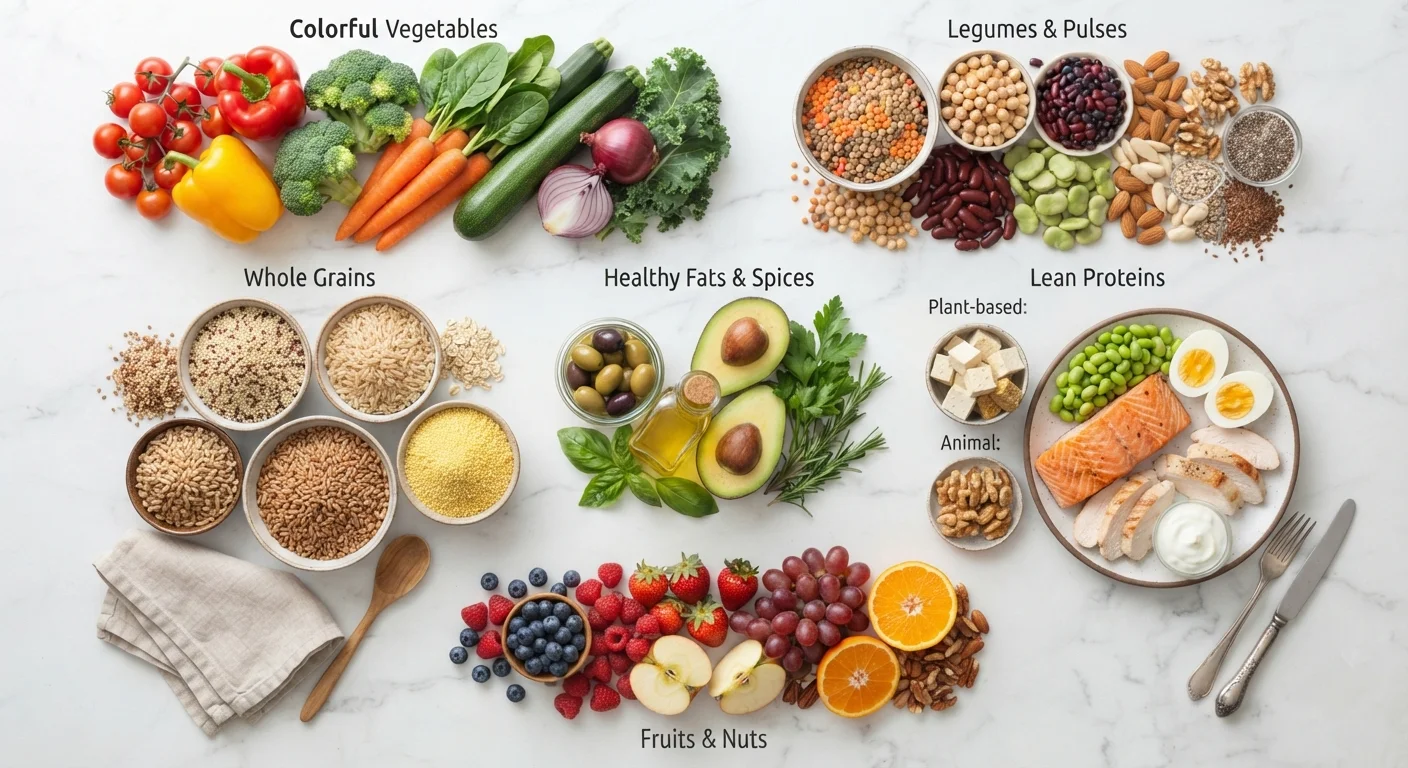
You don't need imported ingredients to eat Mediterranean-style. Focus on affordable staples: canned beans, frozen fish fillets, olive oil, seasonal vegetables, and whole-grain bread or pasta. Swapping butter for olive oil in cooking and adding a handful of greens to most meals are simple, low-friction starting points. See what a balanced plate actually looks like for a practical visual guide.
Plant-Based Eating: Varieties and Nutritional Considerations
Plant-based eating exists on a spectrum — from fully vegan (no animal products) to flexitarian (mostly plants, occasional animal products). The common thread is centering fruits, vegetables, legumes, nuts, seeds, and whole grains while reducing or eliminating meat and dairy.
Research consistently links plant-heavy diets with lower body weight, improved cholesterol profiles, and reduced risk of heart disease. However, nutritional completeness requires attention: vitamin B12, iron, zinc, omega-3 fatty acids, and calcium can be harder to obtain without animal products. Supplementation and food pairing strategies are often necessary, particularly for fully vegan approaches.
For a deeper look at how plant and animal proteins compare nutritionally, see plant proteins vs. animal proteins. And if you're considering the shift, this introduction to plant-based eating covers practical first steps.
Low-Carb and Ketogenic Patterns: Benefits and Caveats
Low-carb diets restrict carbohydrate intake — typically replacing those calories with protein and fat. The ketogenic diet takes this further, reducing carbs to a level that pushes the body into ketosis, a metabolic state where fat becomes the primary fuel source.
Short-term evidence supports low-carb eating for weight loss and blood sugar management. Some research suggests benefits for people with type 2 diabetes, particularly in reducing medication dependence — though this must always be managed in close coordination with a physician. Long-term outcomes are less clear, and adherence tends to decline over time for many people.
A key concern is nutritional breadth: highly restrictive low-carb diets can limit fiber intake and reduce consumption of nutrient-dense foods like legumes and whole grains. Understanding how carbohydrates function alongside protein is useful context — see protein vs. carbohydrates: which should anchor your meals.
Low-Carb Diets Require Medical Oversight for Some
If you take medication for diabetes, high blood pressure, or other conditions, a significant reduction in carbohydrate intake can affect how those medications work — sometimes rapidly. Do not begin a ketogenic or very low-carb diet without first discussing it with your doctor or a registered dietitian. This is especially important for people with kidney disease, as high protein intake may not be appropriate for everyone.
DASH, Flexitarian, and Other Notable Patterns
The DASH diet was developed specifically to reduce high blood pressure. It emphasizes fruits, vegetables, whole grains, and low-fat dairy while limiting sodium, saturated fats, and added sugars. Clinical trials support its effectiveness for blood pressure reduction and overall cardiovascular health.
The flexitarian approach — a portmanteau of 'flexible' and 'vegetarian' — offers a less rigid entry point for those interested in plant-forward eating without full elimination of meat. Research suggests even partial reductions in meat consumption can carry health benefits, making this pattern accessible for a wide range of people.
For a grounding framework on building any of these patterns into daily meals, the healthy eating basics hub and meal planning tips offer practical, non-prescriptive starting points. It's also worth reading why fad diets keep failing to understand what makes any eating pattern last.
This article is for general informational and educational purposes only and is not a substitute for personalized medical or nutritional advice. Speak with a qualified healthcare provider before making significant changes to your diet, especially if you have an existing health condition.
The content on this site is for informational purposes only and is not a substitute for professional advice. Always consult a qualified professional for guidance specific to your situation.