

Start here
What 'Plant-Based' Actually Means
Clarify the terms
Plant-Based vs. Vegan: An Important Distinction
Get the nutrition right
Key Nutrients to Watch
Take action
Practical First Steps
What 'Plant-Based' Actually Means
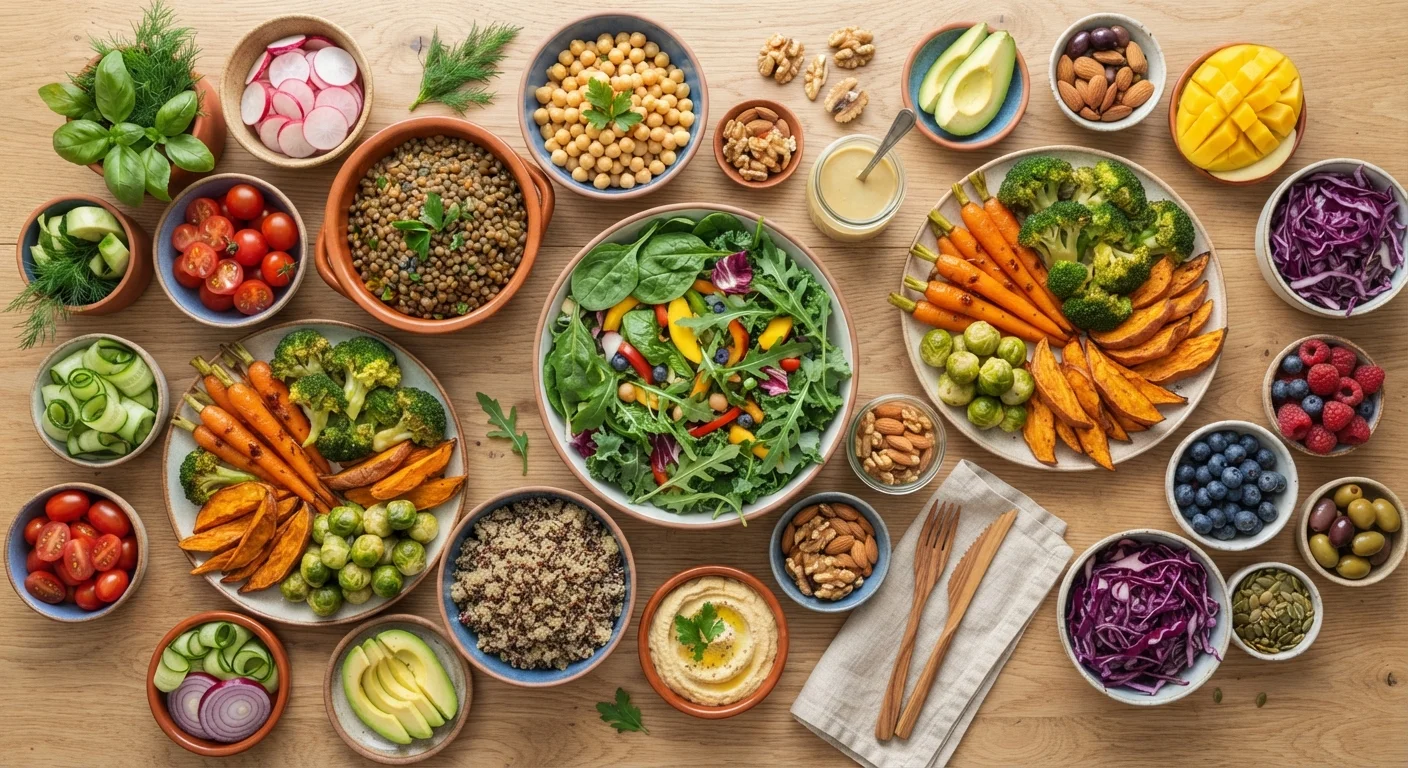
The term plant-based eating gets used loosely, which causes real confusion. At its core, it simply means building the majority of your meals around foods that come from plants: vegetables, fruits, legumes, whole grains, nuts, and seeds. It's a dietary pattern — a way of organizing your plate — rather than a strict rulebook.
What it doesn't mean is that every bite must be animal-free. Unlike veganism, plant-based eating exists on a spectrum. The guiding principle, according to established nutrition science, is that plant foods should dominate, while animal products — if eaten at all — play a smaller, supporting role.
This framing matters because it makes the approach accessible. You don't have to identify with a label or commit to perfection. The goal is a directional shift toward more whole, plant-derived foods — a shift supported by decades of research linking higher plant-food intake to lower rates of certain chronic diseases.
Plant-based diet
An eating pattern that makes vegetables, fruits, legumes, whole grains, nuts, and seeds the primary source of calories and nutrients, with animal products reduced or eliminated.
Flexitarian
A flexible eating style that is mostly plant-based but occasionally includes meat or fish — no strict rules, just a strong plant focus.
Heme vs. non-heme iron
Heme iron comes from animal foods and is absorbed efficiently by the body. Non-heme iron comes from plants and is absorbed less readily, but pairing it with vitamin C improves uptake.
Bioavailability
How much of a nutrient your body can actually absorb and use from a food. Some plant nutrients have lower bioavailability than their animal-source equivalents.
ALA, EPA, and DHA
Three types of omega-3 fatty acids. ALA is found in plant foods like flaxseed; EPA and DHA are found mainly in fatty fish and algae. The body converts only a small amount of ALA into EPA and DHA.
Fortified food
A food that has had vitamins or minerals added during processing — for example, plant milks fortified with calcium and vitamin D to match what dairy naturally provides.
Plant-Based vs. Vegan: An Important Distinction
These two terms overlap but are not interchangeable. Veganism is an ethical commitment to avoiding all animal-derived products — in food, clothing, cosmetics, and beyond. It's a values-driven lifestyle, and the diet follows from those values. A vegan diet is, by definition, entirely free of meat, dairy, eggs, and other animal ingredients.
Plant-based eating, by contrast, is primarily about nutrition and food pattern. Someone eating plant-based might still have salmon once a week, a splash of milk in their coffee, or cheese on a special occasion. What defines them is that plants make up the overwhelming majority of their calories and nutrients.
This distinction is practical, not just semantic. When researchers study popular diet patterns, plant-based eating categories often include semi-vegetarian and flexitarian approaches — not only strict vegans. Understanding this helps you set realistic expectations and avoid the all-or-nothing thinking that derails many people before they start.
Key Nutrients to Watch
Shifting toward plants means rethinking where certain nutrients come from. Most people on a well-varied plant-based diet get plenty of fiber, potassium, folate, and antioxidants. The nutrients that need more deliberate attention are the ones concentrated in animal foods.
- Vitamin B12: Found almost exclusively in animal products. Those significantly reducing or eliminating animal foods typically need a supplement or B12-fortified foods. This is not optional — B12 deficiency can cause serious neurological problems over time.
- Iron: Plants contain non-heme iron, which the body absorbs less efficiently than the heme iron in meat. Pairing iron-rich plants (lentils, tofu, pumpkin seeds) with vitamin C boosts absorption.
- Calcium: Dairy is the obvious source, but fortified plant milks, white beans, bok choy, and almonds all contribute meaningful amounts.
- Omega-3 fatty acids: Flaxseeds, chia seeds, and walnuts provide ALA, a plant-based omega-3. However, the body converts only a small fraction to the EPA and DHA forms found in fatty fish. An algae-based omega-3 supplement addresses this gap directly.
- Zinc: Found in legumes and whole grains, though absorption is lower than from animal sources. Soaking and sprouting beans can improve bioavailability.
For reading food labels effectively, look for fortified plant-based products and check the percent daily value of these key nutrients. This is general educational information — consult a registered dietitian for guidance tailored to your individual health needs.
Pair Iron-Rich Plants With Vitamin C
To get the most iron from plant sources, eat them alongside foods high in vitamin C — think lentil soup with a squeeze of lemon, or spinach salad with sliced strawberries. Vitamin C converts non-heme iron into a form your body absorbs more easily. Avoid drinking coffee or tea with iron-rich meals, as tannins in both beverages can inhibit absorption.
Practical First Steps
The most common mistake beginners make is trying to overhaul everything at once. Research on habit formation consistently shows that gradual, specific changes stick better than dramatic overnight shifts. Here's how to start without overwhelming yourself:
- Add before you subtract. Start by adding a serving of legumes — lentils, chickpeas, black beans — to meals you already enjoy. A taco with beans, a soup with lentils, hummus as a snack. This builds familiarity without requiring you to give anything up immediately.
- Rethink your protein anchors. Many people plan meals around a meat centerpiece. Try reversing this: plan around the grain and vegetable, and let protein (plant or otherwise) fill a supporting role. See how plant proteins compare nutritionally as you explore options.
- Stock a practical pantry. Dried lentils, canned beans, whole-grain pasta, oats, nuts, and frozen vegetables make plant-forward cooking fast and genuinely affordable. No specialty stores required.
- Plan ahead. A loose weekly meal plan reduces the friction that leads to skipping vegetables in favor of convenience food. Structured meal planning also helps reduce food waste.
Plant-based eating doesn't have to be all-or-nothing. Even modest increases in vegetable and legume intake, paired with modest reductions in processed meat, represent a meaningful nutritional shift. Building habits gradually is almost always more effective than attempting a full dietary transformation overnight.
This article is for general informational and educational purposes only and is not a substitute for personalized medical or dietary advice. Consult a qualified healthcare provider or registered dietitian before making significant changes to your diet, especially if you have an existing health condition.
Frequently Asked Questions
No. Plant-based eating is a spectrum. Many people significantly reduce animal products while still occasionally eating meat, fish, or dairy. The focus is on making plants the foundation of your diet, not on rigid elimination.
Not necessarily. Heavily processed vegan cookies or plant-based fast food technically qualify but offer little nutritional value. Whole, minimally processed plant foods — vegetables, legumes, whole grains, nuts — are where the real health benefits lie.
Vitamin B12, iron, calcium, long-chain omega-3 fatty acids (EPA and DHA), zinc, and iodine are the nutrients that require the most planning. Some may benefit from supplementation, so consult a registered dietitian for personalized guidance.
Yes — dried beans, lentils, oats, canned tomatoes, and frozen vegetables are among the most affordable foods available. Specialty 'plant-based' products tend to be expensive, but a whole-foods approach can actually lower grocery costs.
The Mediterranean diet also emphasizes plants, olive oil, and legumes but regularly includes fish and moderate dairy. Plant-based eating places a stronger focus on reducing or eliminating animal foods. Both patterns have solid research supporting their health benefits.
A well-planned plant-based diet can support all life stages, but the nutritional stakes are higher for children, pregnant individuals, and older adults. Anyone in these groups should work closely with a healthcare provider or registered dietitian before making significant dietary changes.
The content on this site is for informational purposes only and is not a substitute for professional advice. Always consult a qualified professional for guidance specific to your situation.