

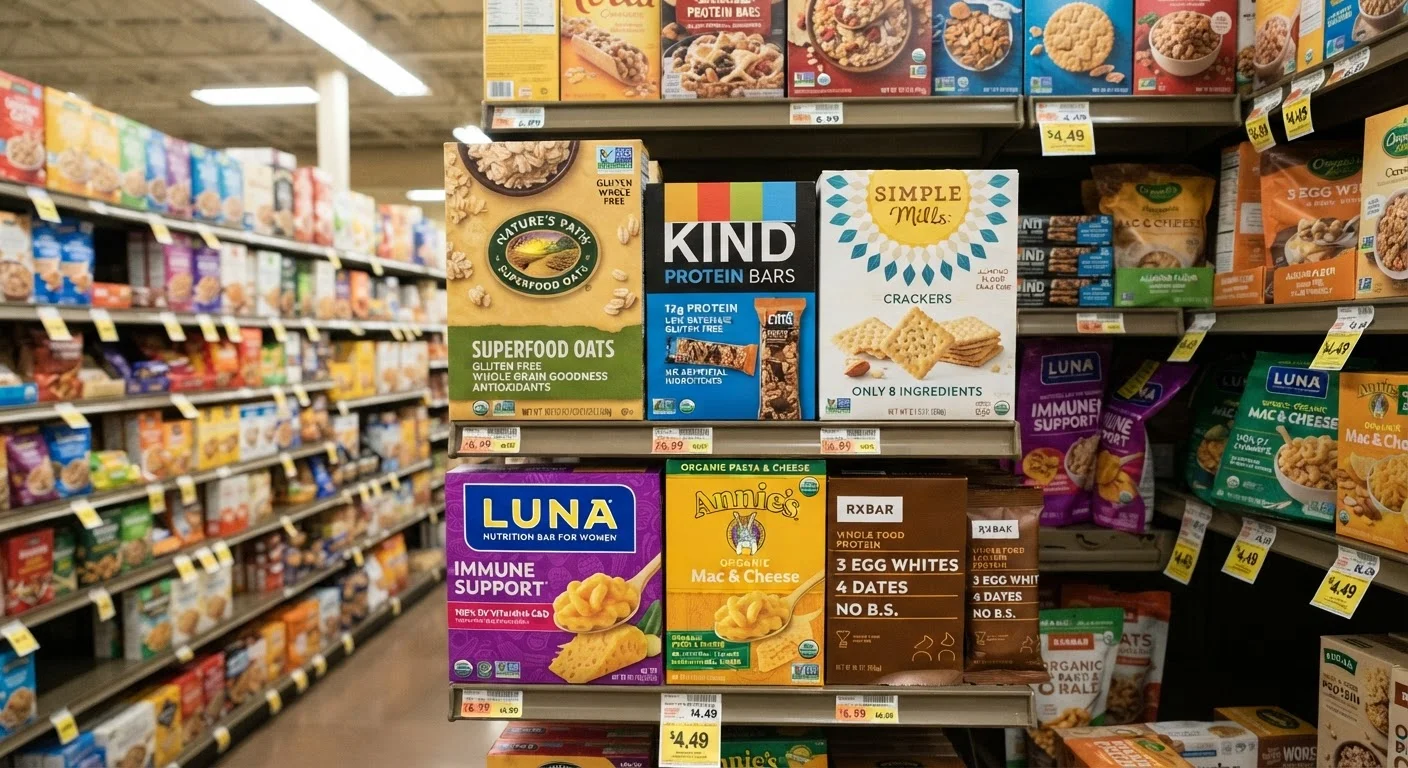
The Package Is Designed to Be Seen Before It's Read
When you reach for a product on a shelf, your brain processes color, shape, and imagery within milliseconds — long before you consciously read any text. Food manufacturers know this, and front-of-package design is built around it. A bright green label with leaf motifs signals 'healthy' and 'natural' to most shoppers, regardless of what's actually inside the box.
This isn't accidental. Consumer research consistently shows that packaging color influences perceived healthfulness, taste expectations, and even calorie estimates. Products marketed to health-conscious shoppers tend to use earth tones, clean fonts, and nature imagery precisely because these visual cues lower scrutiny. Meanwhile, the Nutrition Facts panel — the most regulated and informative part of any label — sits quietly on the back or side, where fewer eyes land.
Understanding this dynamic is the first step toward reading labels on your own terms rather than the manufacturer's. For a plain-language walkthrough of the full label, see Reading a Food Label for the First Time.
~70%
Shoppers who use front-of-package info for decisions
Research published in nutritional and consumer behavior journals consistently finds that a majority of shoppers rely primarily on front-of-package information when making quick purchase decisions rather than checking the Nutrition Facts panel.
< 1 in 3
Adults who regularly read the Nutrition Facts panel
FDA consumer research has found that while label awareness is high, consistent use of the Nutrition Facts panel — particularly for items like added sugars and serving size — remains considerably lower than awareness alone would suggest.
Dozens
Unregulated 'healthy' terms in common use
Terms such as 'natural,' 'wholesome,' 'simple,' 'clean,' and 'artisan' appear frequently on American food packaging but carry no FDA-defined nutrient standards, meaning they can legally appear regardless of a product's nutritional profile.
How Selective Claims Create a Misleading Impression
A manufacturer is not required to highlight every nutrient on the front of a package — only the ones that reflect well on the product. This selectivity is entirely legal and extremely common. A cereal box might trumpet '8 grams of protein per serving' while quietly containing 12 grams of added sugar in that same serving. A snack food might carry a 'no artificial colors' badge while still being high in sodium and saturated fat.
The FDA defines specific thresholds for regulated claims. For example, 'low sodium' must contain 140 mg or less per serving, and 'good source of fiber' requires at least 10% of the Daily Value. But unregulated phrases — 'simple ingredients,' 'clean label,' 'wholesome,' 'made with real honey' — carry no legal standard and can appear on virtually any product. These phrases borrow the credibility of regulated language without any of the accountability.
For a closer look at which terms carry genuine regulatory weight and which don't, Natural, Organic, and Non-GMO: What These Label Claims Are Actually Regulated to Mean breaks it down clearly.
Serving Size, Font Size, and the Numbers Game
Numbers on a label are only meaningful in context — and manufacturers have historically had tools to make those numbers look favorable. Serving sizes, before FDA standardization updates, could be set unrealistically small. A serving of chips listed as 'about 7 chips' makes the calorie count appear modest, even if the average person eats several times that amount. Updated FDA rules have moved many serving sizes closer to real-world consumption, but the habit of checking 'servings per container' remains essential.
Font hierarchy is another lever. The calorie count is now required to appear in larger, bolder type under updated Nutrition Facts rules — a deliberate regulatory push toward transparency. But on the front of the package, manufacturers still control emphasis entirely. A large, colorful callout for a favorable nutrient draws the eye; an unfavorable one, like saturated fat content, is rarely highlighted voluntarily.
What Nutrition Labels Are Actually Telling You explains how to decode every number on the panel, including percent Daily Values and how to interpret them for your own diet.
“The front of the package is real estate controlled entirely by the manufacturer. The back of the package — the Nutrition Facts panel and ingredient list — is where federal standards apply. Shoppers who learn to lead with the back label are playing a different game entirely.”
— Marion Nestle, Professor Emerita of Nutrition, Food Studies, and Public Health, New York University
Building a Habit That Cuts Through the Noise
The most practical defense against label-driven perception management is a consistent reading habit: front of package last, not first. Flip to the Nutrition Facts panel, check serving size and servings per container, scan for added sugars and sodium, then read the ingredient list. Ingredients are listed in descending order by weight — if refined flour or added sugar appears in the first three ingredients, that's the majority of what you're eating. For more on this, Ingredient Lists Follow Rules Most Shoppers Don't Know About explains how the ordering system works.
It's also worth checking the front-of-package claims article in this series: Front-of-Package Claims That Sound Healthier Than They Are covers terms like 'multigrain,' 'light,' and 'made with real fruit' and explains what to check instead.
Flip the Package Before You Decide
Make it a habit to check the Nutrition Facts panel before the front label earns your trust. Confirm the serving size reflects how much you'll actually eat, then check added sugars, sodium, and the first three ingredients. A product that looks ideal from the front often tells a different story from the back.
This article is for general informational and educational purposes only and is not a substitute for professional dietary or medical advice. Consult a registered dietitian or qualified healthcare provider for guidance tailored to your individual health needs.
Frequently Asked Questions
Some are, some aren't. Claims like 'low fat,' 'reduced sodium,' and 'good source of calcium' have strict FDA definitions. But phrases like 'wholesome,' 'natural,' 'simple ingredients,' or 'made with real fruit' are largely unregulated and can appear regardless of a product's actual nutritional profile.
Research in consumer behavior consistently shows that green packaging and nature-themed imagery create an impression of healthfulness, freshness, and environmental responsibility — even when the product inside doesn't merit those associations. Manufacturers use these visual cues intentionally to prime shoppers before they read any text.
Manufacturers once had wide latitude to set serving sizes smaller than real-world portions, which made calorie and sugar counts look lower per serving. FDA updates to Nutrition Facts rules have standardized many serving sizes to better reflect what people actually eat, but it's still worth checking how many servings a package contains.
Look past the front of the package and check the Nutrition Facts panel for total calories, added sugars, sodium, saturated fat, and fiber. Then read the ingredient list — ingredients appear in descending order by weight, so the first few items make up the bulk of the product.
'Multigrain' simply means a product contains more than one type of grain — it says nothing about whether those grains are whole or refined. A multigrain product can be made almost entirely from refined flour with minimal nutritional benefit. Look for 'whole grain' as the first ingredient for a more meaningful indicator.
The USDA Organic seal is one of the more rigorously regulated labels, with defined standards for farming practices and prohibited substances. However, 'organic' describes how ingredients were produced, not how nutritious a product is overall. An organic cookie is still a cookie.
The content on this site is for informational purposes only and is not a substitute for professional advice. Always consult a qualified professional for guidance specific to your situation.