

Option A
Total Sugars
The complete sugar picture — natural and added combined.
Best for: Understanding the full sugar content of a food, including sugars naturally present in ingredients like fruit or dairy.
Option B
Added Sugars
The manufacturer's contribution — sweeteners added during processing.
Best for: Tracking how much sugar a food company actually added, which is the figure most relevant to dietary health guidelines.
What Each Figure Actually Measures
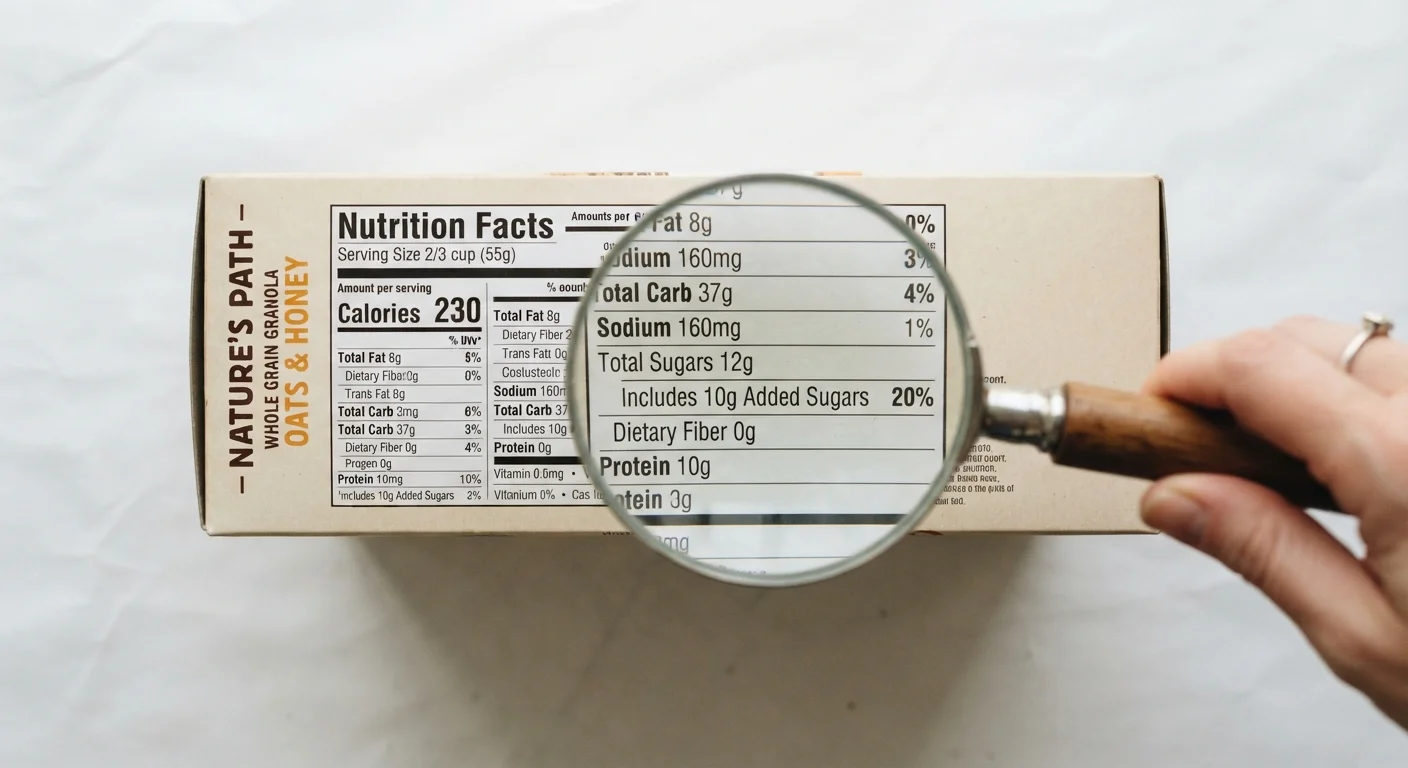
When you scan a Nutrition Facts label, you will see Total Sugars listed in grams, with Added Sugars indented directly beneath it. These are not two versions of the same number — they measure fundamentally different things.
Total Sugars is the sum of every sugar molecule in a serving, regardless of origin. That includes lactose naturally present in milk, fructose from a mashed banana in a smoothie, and any sweetener a manufacturer stirred in. It is a complete count.
Added Sugars counts only the sweeteners introduced during manufacturing or preparation — cane sugar, high-fructose corn syrup, honey, agave, maple syrup, fruit juice concentrates used as sweeteners, and dozens of other ingredients. These are the sugars that would not be in the product at all if no sweetener were added. For a deeper look at how those ingredients are named on packaging, see how added sugars hide on ingredient lists.
The FDA mandated this separate disclosure — effective for most manufacturers by 2020 — precisely because the two numbers tell very different stories about a food's nutritional quality.
| Criterion | Total Sugars | Added Sugars |
|---|---|---|
| What it counts | All sugars — natural + added | Only manufacturer-added sweeteners |
| Includes naturally occurring sugars | Yes | No |
| Has a % Daily Value on label | No | Yes (based on 50g/day) |
| Targeted by Dietary Guidelines | Not specifically | Yes — limit to <10% of calories |
| Best used for | Full sugar accounting | Evaluating processing level |
| Label placement | Main line under Carbohydrates | Indented sub-line below Total Sugars |
Why the Distinction Matters for Your Health
Consider two foods, each showing 12 grams of Total Sugars per serving. The first is plain Greek yogurt; its sugar is almost entirely lactose, a naturally occurring carbohydrate that comes packaged with protein and calcium. The second is a flavored yogurt with 11 grams of Added Sugars. Nutritionally, these are very different products — yet the Total Sugars line reads nearly the same.
The 2020–2025 Dietary Guidelines for Americans, published by the U.S. Departments of Agriculture and Health and Human Services, specifically target Added Sugars — not total sugars — when recommending that Americans limit intake to less than 10% of daily calories. For a standard 2,000-calorie diet, that works out to roughly 50 grams (about 12 teaspoons) of Added Sugars per day. The % Daily Value figure printed next to Added Sugars on the label is calibrated to that 50-gram benchmark, giving you an at-a-glance gauge of how one serving fits into that limit.
<10%
Recommended daily calorie limit from Added Sugars
Per the 2020–2025 Dietary Guidelines for Americans, issued by the USDA and HHS.
50g
Added Sugars daily value used on Nutrition Facts labels
The FDA set this reference amount for a 2,000-calorie daily diet to calculate the % Daily Value for Added Sugars.
17+
Names for added sugars commonly found on ingredient lists
The FDA recognizes many ingredient names as added sugars, including syrups, concentrates, and various forms of refined sweeteners.
Naturally occurring sugars, by contrast, are not specifically capped in federal dietary guidance. This is partly because whole foods containing them — dairy, fruit, some vegetables — also deliver fiber, vitamins, minerals, and other beneficial compounds. To understand how these distinctions interact with the rest of the label, see our broader guide on what nutrition labels are actually telling you.
How to Use Both Numbers When Shopping
Neither figure is useless — the skill is knowing which one answers which question.
- Check Added Sugars first when evaluating processed or packaged foods — sauces, cereals, granola bars, flavored drinks, condiments. A low or zero Added Sugars count signals the product is not relying on sweeteners to taste appealing.
- Reference Total Sugars when you want to understand the full carbohydrate load from sugars, particularly if you are monitoring blood sugar levels under guidance from a healthcare provider.
- Compare the two numbers together. If Total Sugars and Added Sugars are nearly identical — say, 18g total and 17g added — most of the sugar came from the manufacturer, not the food's natural ingredients. If Added Sugars is zero while Total Sugars is moderate, the sugar is naturally occurring.
- Look at the % Daily Value for Added Sugars. A value of 5% or below is generally considered low; 20% or above is high, per standard FDA label-reading guidance.
These two figures work together in the same way fiber's total and sub-components interact on the label — something worth exploring in our guide on fiber figures on labels. And if you want to go further on the science behind why the source of sugar changes its health impact, see added sugar vs. natural sugar.
This article is for general informational and educational purposes only and is not a substitute for personalized medical or dietary advice. Consult a qualified healthcare professional or registered dietitian for guidance specific to your health needs.
The content on this site is for informational purposes only and is not a substitute for professional advice. Always consult a qualified professional for guidance specific to your situation.