

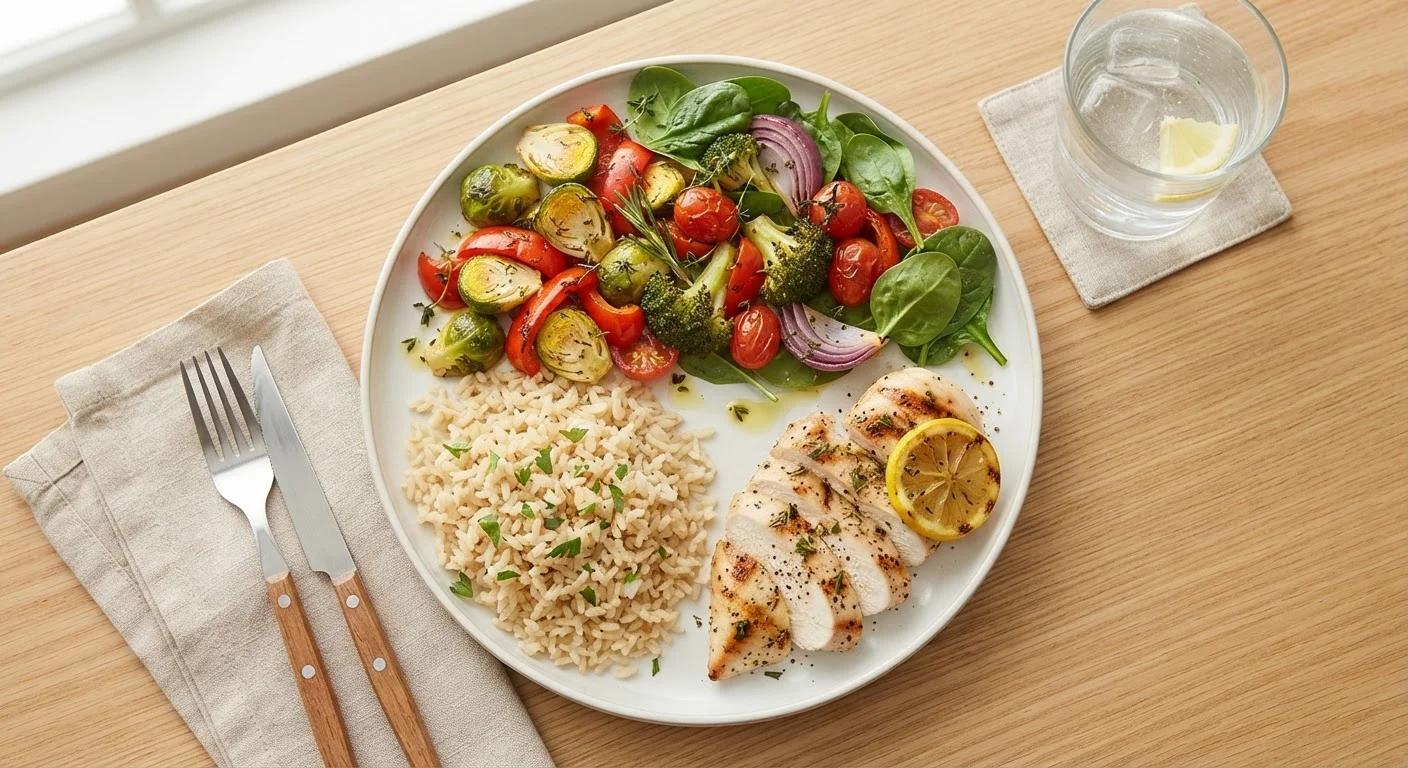
The Visual Framework You Actually Need
The phrase "balanced meal" gets repeated so often it starts to lose meaning. But the underlying concept is genuinely useful — and simpler than most nutrition advice makes it sound. Instead of tracking grams or memorizing percentages, think of your plate as a visual map.
The approach endorsed by the USDA's MyPlate model breaks it down like this: fill half your plate with vegetables and fruit, reserve one quarter for protein, and use the remaining quarter for grains — ideally whole grains. Add a small serving of healthy fat, and you have a nutritionally sound foundation for most meals.
This isn't a rigid rule. It's a working mental model. You don't need a food scale or an app — just a rough visual check before you eat. Over time, that habit builds nutritional awareness without obsessive tracking. For more on that approach, see building a balanced plate without counting every calorie.
9 in 10
Americans fall short of vegetable recommendations
According to the CDC's State Indicator Report on Fruits and Vegetables, the vast majority of U.S. adults consume less than the recommended daily amount of vegetables.
~95%
Adults not meeting daily fiber intake recommendations
The American Society for Nutrition has reported that dietary fiber remains one of the most widely under-consumed nutrients in the U.S. diet, with nearly all adults falling short.
Less than 15%
U.S. adults eating enough whole grains
The USDA Dietary Guidelines Advisory Committee has noted that whole grain consumption remains well below recommended levels across nearly all American age groups.
Breaking Down Each Section of the Plate
Vegetables and Fruit (Half the Plate)
This is the biggest real estate on the plate for good reason. Vegetables and fruit provide fiber, vitamins, minerals, and antioxidants that support nearly every system in the body. Prioritize non-starchy vegetables — leafy greens, broccoli, peppers, tomatoes, zucchini — since they deliver high nutritional value without significantly raising blood sugar. Fruit counts here too, particularly whole fruit rather than juice.
Protein (One Quarter)
Protein supports muscle maintenance, immune function, and satiety. A balanced plate includes a palm-sized serving of lean or plant-based protein: grilled chicken, fish, eggs, beans, lentils, tofu, or low-fat dairy. Varying your protein sources across the week gives you a broader nutrient profile. Plant-based proteins also come with fiber — a bonus most Americans fall short on.
Whole Grains or Starchy Vegetables (One Quarter)
The grain quarter works hardest when it's filled with whole grains — brown rice, quinoa, whole-wheat pasta, oats, or farro — or starchy vegetables like sweet potatoes and corn. Whole grains retain their bran and germ, meaning they deliver fiber, magnesium, and B vitamins that refined versions lose during processing.
Healthy Fat (Small Portion)
Fat doesn't need its own plate section, but it should be present. A drizzle of olive oil, a few slices of avocado, a small handful of nuts, or a tahini dressing all add healthy unsaturated fats that support nutrient absorption and keep you satisfied longer. The portion stays modest — a tablespoon or two — not because fat is harmful, but because it's calorie-dense.
Balance Across the Day, Not Just One Meal
One of the most freeing ideas in practical nutrition is that balance is cumulative. A breakfast of eggs and fruit that's light on grains isn't a failure — it's just one meal. The goal is to look at the full day (or even the week) and ask whether you're covering all the major nutrient groups over time.
This is especially useful for people with variable schedules, cultural eating patterns, or meals that naturally skew one direction. A lunch of rice and beans with salsa is protein- and grain-forward; a vegetable-heavy dinner balances it out. Mixed dishes like soups, stir-fries, and grain bowls can be fully balanced within a single bowl without needing visual division at all.
If you're working toward more structured consistency, a balanced weekly meal plan can help you apply this framework across multiple days at once — reducing decision fatigue while keeping nutrition on track.
This article provides general nutrition education and is not a substitute for personalized advice from a registered dietitian or qualified healthcare professional. Individuals with specific health conditions, dietary restrictions, or special nutritional needs should seek guidance tailored to their circumstances.
Frequently Asked Questions
No — balance is best evaluated across the full day or even the week, not meal by meal. If lunch is light on vegetables, aim to include more at dinner. Consistency over time matters far more than perfection at any single meal.
Good protein options include poultry, fish, eggs, legumes (beans and lentils), tofu, tempeh, and low-fat dairy. The goal is adequate protein at each meal — roughly a palm-sized portion — from a variety of sources throughout the week.
Whole grains provide fiber, B vitamins, and minerals that refined grains largely lack. While no single food is mandatory, replacing refined grains with whole-grain options when possible offers measurable nutritional benefits for most people.
The balanced plate is a general framework, not a named diet. Named eating patterns like the Mediterranean diet follow specific philosophies around food groups and fat sources. The plate model is flexible enough to accommodate different dietary preferences and cultural foods.
Mixed dishes can absolutely be balanced — just consider whether all three elements (vegetables, protein, whole grains or starch) are represented in the bowl. A stir-fry with tofu, broccoli, peppers, and brown rice is a well-balanced meal even if it isn't visually divided on the plate.
The general framework applies broadly, but specific needs differ by age, activity level, and health status. Children, older adults, and those with chronic conditions should consult a registered dietitian or healthcare provider for guidance tailored to their situation.
The content on this site is for informational purposes only and is not a substitute for professional advice. Always consult a qualified professional for guidance specific to your situation.