

Why Calorie Counting Often Gets in the Way
Calorie tracking apps can create useful awareness — but for many people, logging every bite quickly becomes tedious, anxiety-inducing, or simply unsustainable. The mental load of converting meals into numbers can pull focus away from something more useful: actually eating a varied, nourishing diet most of the time.
There is a simpler alternative rooted in practical plate-building principles that nutrition educators have used for decades. Rather than measuring grams and tallying totals, you learn to recognize roughly what your plate should look like at a glance. This approach won't replace professional dietary guidance for people managing specific health conditions, but for everyday eating it offers a realistic, low-friction path to better nutrition.
The goal isn't a perfect plate every single meal — it's a generally balanced pattern across the week. For a broader look at how that pattern holds together, see what makes a balanced weekly meal plan work.
Your Hand Is a Built-In Portion Guide
Because hand size tends to scale with body size, your own hand is a surprisingly reliable portioning tool. A palm-sized amount for protein, a cupped hand for grains, a thumb for fats, and two fists for vegetables covers the basics without any measuring equipment. It's imprecise by design — and that's the point.
How to Build a Balanced Plate, Step by Step
The steps below translate nutrition fundamentals into visual, portion-based decisions you can make in real time — at home, at a restaurant, or anywhere else. No app, no scale, no spreadsheet required.
What you will need
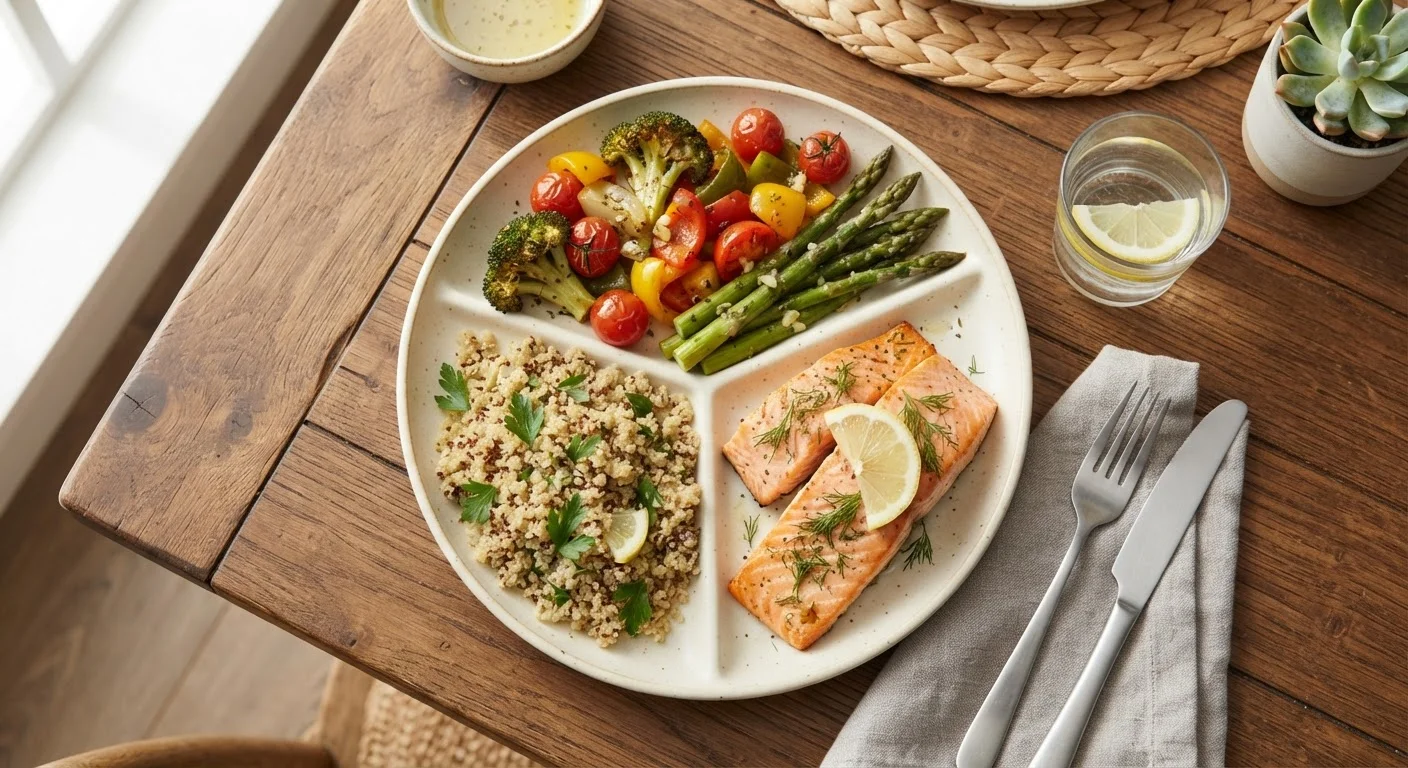
Fill half your plate with vegetables and fruit
This is the foundational move. Non-starchy vegetables — leafy greens, broccoli, peppers, cucumbers, zucchini, carrots — provide fiber, vitamins, and minerals for relatively few calories, and they create the volume that keeps you satisfied. Fruit counts here too, though vegetables should make up the majority of this half.
You don't need precise measurement. Eyeball it: does the veggie portion take up roughly half the plate surface? If yes, you're set.
Reserve one quarter for a quality protein source
Protein supports muscle maintenance, keeps hunger in check between meals, and plays a role in nearly every body function. Aim for a portion roughly the size of your palm — about 3 to 5 ounces for most adults, though individual needs vary.
Options span a wide range: chicken, fish, eggs, legumes (beans, lentils, chickpeas), tofu, tempeh, or plain Greek yogurt are all reasonable choices. The specific source matters less than including one consistently.
Fill the remaining quarter with whole or minimally processed grains
Grains provide energy and, when whole, contribute additional fiber and B vitamins. Brown rice, quinoa, whole wheat pasta, farro, oats, or whole grain bread are common go-tos. A portion the size of your cupped hand is a practical visual guide for most people.
If your protein source is already carbohydrate-rich — such as lentils or beans — you can reduce this portion or swap it for an additional vegetable serving.
Add a small amount of healthy fat
Fat is essential for absorbing certain vitamins and supporting brain and hormone function. A thumb-sized portion of fat is enough at most meals — think a drizzle of olive oil used in cooking, a small handful of nuts or seeds, a quarter of an avocado, or a light spread of nut butter.
Fat is calorie-dense, so the goal here isn't abundance — it's intentional inclusion rather than elimination.
Choose a low-sugar beverage to complete the meal
What you drink alongside your food matters more than most people expect. Sugary drinks can add substantial calories without contributing satiety or nutrients. Water is the default recommendation. Unsweetened coffee, tea, or sparkling water are good alternatives. If you enjoy milk or a plant-based option, an unsweetened variety works well with most meals.
Making It Stick Beyond Today
A balanced plate built once is a good meal. Built consistently, it becomes a habit that can meaningfully shift how you feel over time. The key is lowering the barrier to entry so that choosing a balanced meal feels like the easier option, not a chore.
Start with whichever meal gives you the most control — for many people that's breakfast or dinner at home. Once that meal feels automatic, apply the same visual framework to lunch or meals on the go. Small, consistent changes tend to outlast dramatic overhauls, and this method is designed with that reality in mind.
It also helps to set your kitchen up for success. A pantry audit can identify gaps and simple swaps that make balanced plates easier to assemble without extra thought. Periodically checking in with a weekly eating self-audit is another lightweight way to spot patterns without obsessive tracking.
This article provides general nutrition information and education. It is not a substitute for personalized advice from a registered dietitian or other qualified healthcare professional. If you have specific dietary needs, a medical condition, or concerns about your nutrition, please consult a qualified professional.
The content on this site is for informational purposes only and is not a substitute for professional advice. Always consult a qualified professional for guidance specific to your situation.