

Our Verdict
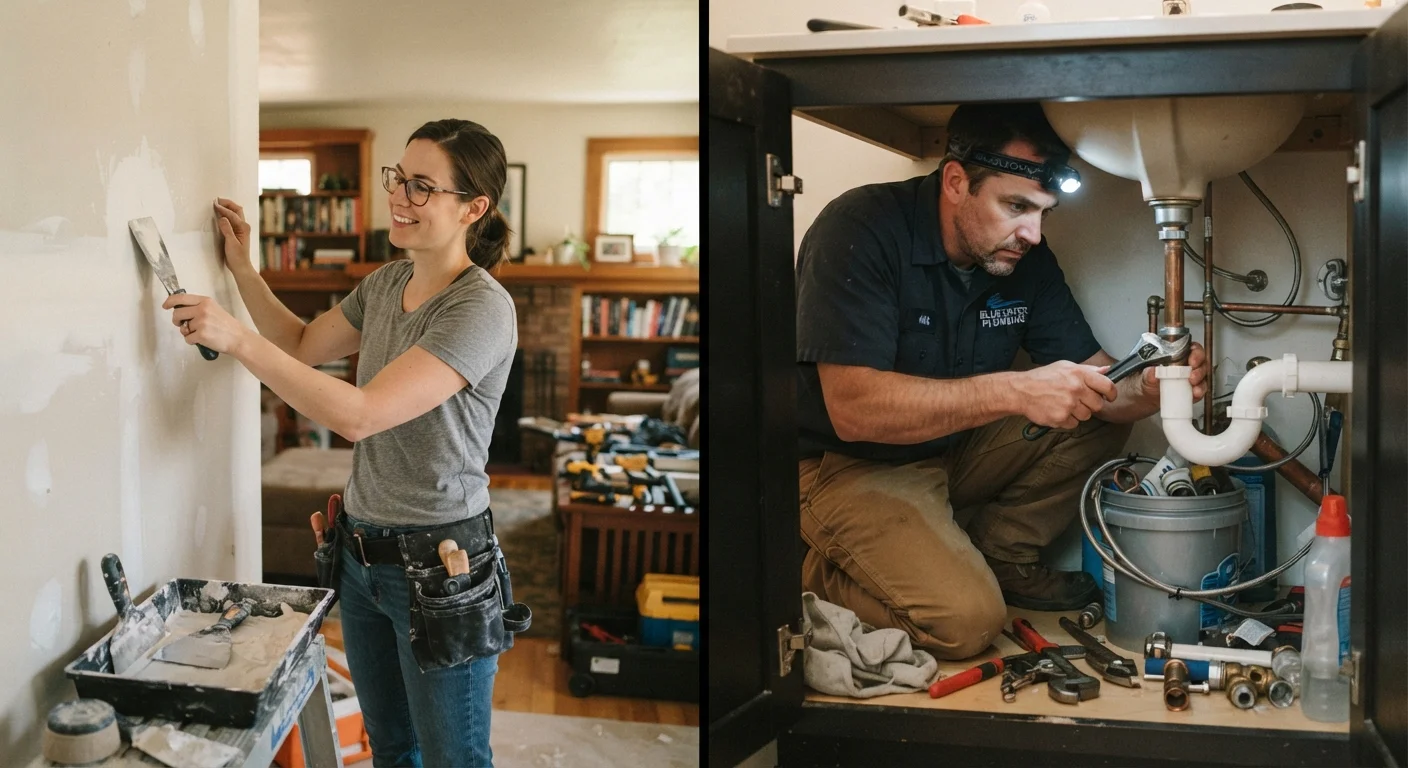
Neither DIY nor hiring a professional is the universal right answer — context determines the call. Low-risk, cosmetic repairs are well-suited to confident homeowners, while anything involving safety systems, structural elements, or permits belongs with a licensed pro. When in doubt, a professional assessment before starting often saves more than it costs.
| Best for | Recommended |
|---|---|
| Homeowners comfortable with tools and low-stakes repairs | DIY |
| Electrical, gas, structural, or plumbing-into-mains work | Hire a Pro |
| Projects requiring permits or inspections | Hire a Pro |
| Time-sensitive repairs where mistakes would worsen damage | Hire a Pro |
Why This Decision Matters More Than You Think
Every homeowner eventually faces it: a leaky faucet, a cracked tile, a breaker that keeps tripping. The question isn't just whether you can fix it — it's whether you should. Making the wrong call in either direction has real consequences. Tackling a job beyond your skill level can create safety hazards, void warranties, or produce unpermitted work that complicates a home sale. Reflexively calling a pro for every minor issue, on the other hand, adds up quickly.
The good news is that the decision doesn't have to be a guess. A handful of clear factors — safety risk, required permits, your honest skill level, and the cost of a mistake — can guide you reliably in most situations. See our guide to the real costs of deferred home maintenance for a broader look at how delayed decisions compound over time.
The Core Decision Factors
Before picking up a tool or dialing a contractor, run through these four questions:
- Is there a safety risk? Work involving electricity beyond simple fixture swaps, natural gas lines, structural supports, or load-bearing walls carries injury or catastrophic damage potential. These jobs belong with licensed professionals — full stop.
- Does it require a permit? Many jurisdictions require permits for electrical panel work, HVAC replacement, water heater installation, and additions. Unpermitted work can affect your homeowners insurance and raise red flags during a sale. Always check with your local building department before starting.
- What's the cost of a mistake? Painting a room wrong costs you an afternoon and a can of paint. Incorrectly cutting into a wall to reroute plumbing can cause water damage that runs into thousands of dollars. When the error scenario is expensive or dangerous, professional help is the conservative — and often cheaper — choice.
- Do you have the tools and verified skill? Watching a tutorial is not the same as having done the task. Be honest about your experience level, especially for irreversible work.
| Factor | DIY | Hire a Pro | |
|---|---|---|---|
| Safety risk level | Low — cosmetic or routine | High — gas, electrical, structural | |
| Permit typically required | No | Often yes | |
| Skill and tools needed | Basic, widely available | Specialized, licensed | |
| Cost of a mistake | Low — easily corrected | High — can compound damage | |
| Time investment | Variable — can be slower | Faster with expertise | |
| Insurance and code implications | Minimal for low-risk tasks | Work is documented and compliant |
What Generally Belongs in the DIY Column
Many routine maintenance tasks are genuinely manageable for a careful, patient homeowner. These tend to share a few traits: the work is cosmetic or low-stakes, mistakes are easy to identify and correct, no permits are involved, and the required tools are basic.
- Patching small drywall holes and repainting
- Replacing light switch covers, outlet covers, or light fixtures (with power off at the breaker)
- Caulking around tubs, sinks, and windows
- Replacing faucet aerators or showerheads
- Installing or replacing weatherstripping and door sweeps
- Cleaning gutters and downspouts
- Replacing toilet flappers and fill valves
These are also the kinds of tasks that, done consistently, prevent the larger problems explored in our comprehensive home maintenance systems guide.
Start With a Maintenance Schedule
Many DIY-friendly tasks are most effective when done on a regular schedule rather than reactively. Keeping a simple checklist — seasonal gutter cleaning, annual caulk inspection, bi-annual HVAC filter changes — turns maintenance into a routine rather than a crisis. Consistent small efforts are what prevent the calls to professionals from becoming urgent and expensive.
What Typically Requires a Licensed Professional
Certain categories of home repair exist in a different risk tier entirely. Regardless of how many tutorials exist online, these areas carry serious consequences when done incorrectly — for your safety, your neighbors', your home's structure, and your legal standing as a property owner.
- Electrical panel work, rewiring, or new circuit installation — Arc faults and improper grounding are fire hazards. Licensed electricians are required in most jurisdictions for this work.
- Gas line repairs or appliance connections — Gas leaks are immediately life-threatening. This is non-negotiable territory for licensed plumbers or gas fitters.
- Structural repairs — Removing or modifying load-bearing walls without engineering assessment can destabilize a home.
- Roofing beyond minor patching — Working at height with inadequate safety equipment is a leading cause of serious DIY injuries.
- HVAC installation or refrigerant handling — Refrigerant handling is federally regulated and requires EPA certification.
If you're unsure whether a specific task falls into this category, our article on frequently misunderstood home maintenance tasks can help clarify common areas of confusion.
Unpermitted Work Has Lasting Consequences
Work done without required permits isn't just a technicality — it can void your homeowners insurance coverage for related claims, force costly tear-outs during a sale inspection, and create liability if someone is injured. Before starting any project you're unsure about, contact your local building or permitting office to confirm what's required in your jurisdiction.
Making the Final Call
A useful mental check: imagine the worst realistic outcome if something goes wrong. If it's a small mess or a wasted afternoon, DIY is likely reasonable. If it's a flooded basement, an electrical fire, or a structural crack, you've identified a professional's job.
Also consider that getting a professional estimate doesn't obligate you to hire anyone — but it often gives you an accurate baseline against which to weigh the true savings of doing it yourself. Sometimes the gap is significant; sometimes it's surprisingly small once materials and tool rental are factored in.
The same logic applies to vehicle maintenance decisions. Our guide to DIY vs. shop car repairs walks through a parallel framework for that context. In both cases, the goal is informed confidence — not a blanket rule.
The content on this site is for informational purposes only and is not a substitute for professional advice. Always consult a qualified professional for guidance specific to your situation.