

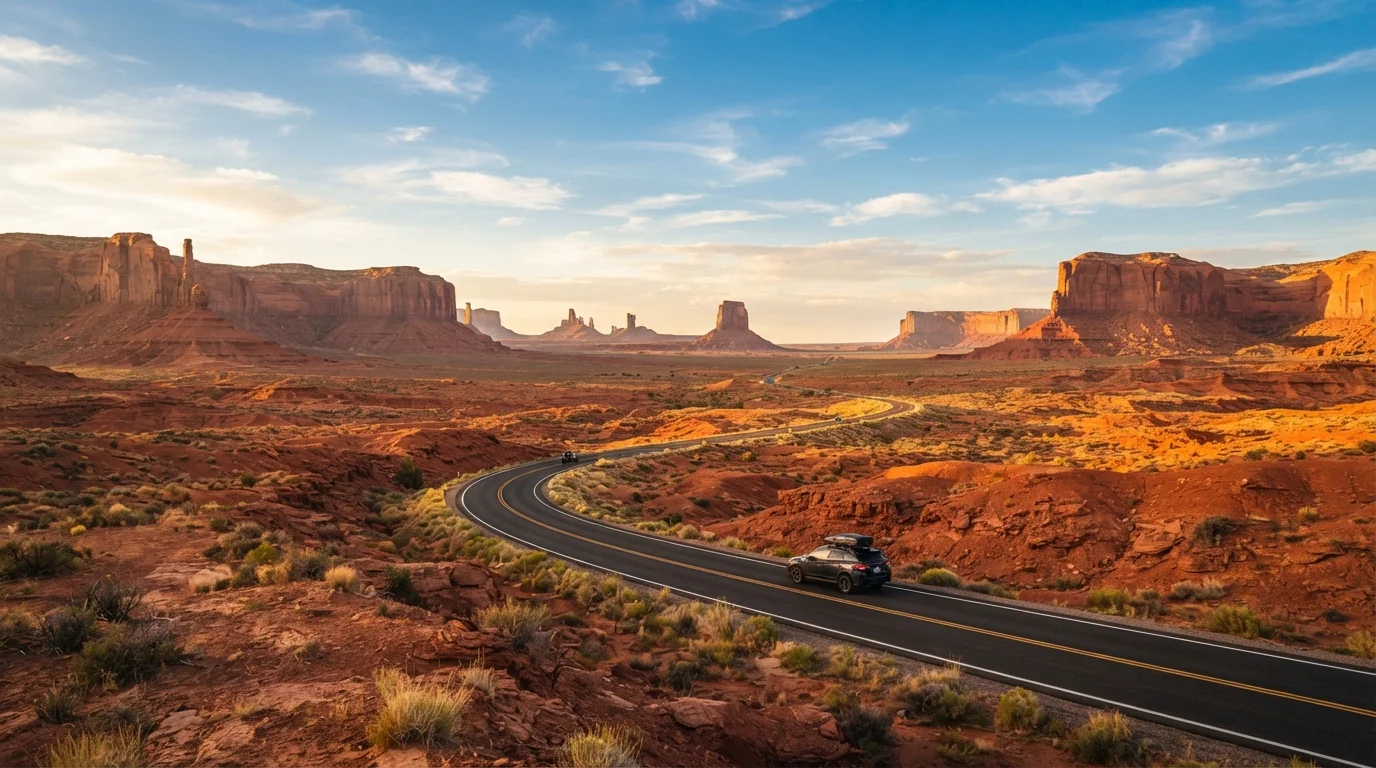
Why National Parks Deserve a Spot in Your Route Planning
Road trips are as much about what you discover along the way as where you end up. For everyday American drivers, national parks represent some of the most accessible, awe-inspiring detours available — many of them sitting squarely on or within a short drive of corridors millions of people already travel. Whether you're crossing the Southwest on a classic loop or winding north along the Pacific Coast, odds are you're already passing close to a park worth stopping for.
The key is building parks into your route rather than treating them as afterthoughts. A park that adds only 20 miles to your drive can offer experiences that outlast the entire trip in memory. If you're new to planning multi-day drives, our beginner's guide to long-distance road trips covers the foundational logistics worth knowing before you go. And for solo drivers, practical solo road trip guidance can help you plan with confidence.
Grand Canyon National Park — Southwest Loop Corridor
Few parks are as route-ready as Grand Canyon. Positioned near US-89 and AZ-64, it sits conveniently along one of the most popular Southwest loops connecting Las Vegas, Sedona, and Monument Valley. The South Rim — open year-round — is the most accessible entry point and rewards even a half-day stop with views that are genuinely difficult to put into words. Driving visitors should note that inner-canyon roads require shuttle use during peak months. Planning a full Southwest road trip can help you sequence this stop alongside nearby canyon country parks.
The South Rim sits minutes off US-89 — one of the Southwest's most-traveled road trip arteries.
Shenandoah National Park — Blue Ridge Parkway Corridor
Skyline Drive, the 105-mile road that runs the full length of Shenandoah, is essentially a national park and a scenic byway rolled into one. It connects directly to the Blue Ridge Parkway at Waynesboro, Virginia, creating a continuous mountain drive stretching all the way into North Carolina. Fall foliage season — typically mid-October in the northern sections — draws heavy traffic, so early morning entry or mid-week visits make a measurable difference. The park offers over 500 miles of hiking trails, making it equally rewarding for drivers who want to step out and stretch. Learn what makes the Blue Ridge Parkway corridor distinct before you plan your pace.
Skyline Drive connects seamlessly to the Blue Ridge Parkway, creating one of America's great continuous mountain drives.
Zion National Park — Utah's Mighty Five Corridor
Utah's Highway 9 threads directly through Zion Canyon, making this one of the few national parks you literally drive into rather than up to. As part of the celebrated "Mighty Five" loop — which also includes Bryce Canyon, Capitol Reef, Canyonlands, and Arches — Zion anchors the western leg of a route that many travelers consider America's premier park-hopping road trip. Private vehicles are restricted within the main canyon from spring through fall; the free shuttle system handles access efficiently. Lodging inside the park fills months in advance during peak season, so campground or lodge reservations should be among your first bookings.
Highway 9 passes directly through Zion Canyon — the park isn't a detour, it's the road itself.
Acadia National Park — New England Coastal Route
Perched on Mount Desert Island off the Maine coast, Acadia sits near the northeastern end of US Route 1 — a corridor many travelers follow from the mid-Atlantic through New England. The park's Park Loop Road offers 27 miles of scenic driving past rocky headlands, forested peaks, and Jordan Pond. Unlike many western parks, Acadia is compact and highly manageable for first-time visitors. Fall visits pair beautifully with the broader New England foliage season. Comparing the New England foliage drive to other scenic seasonal routes can help you decide when to time your coastal run.
Acadia's Park Loop Road delivers 27 miles of coastal and mountain scenery just off the US Route 1 corridor.
Olympic National Park — Pacific Northwest Cascade Loop
Olympic is one of the most geographically diverse parks in the country — encompassing temperate rainforest, alpine meadows, and wild Pacific coastline within a single boundary. It anchors the western leg of the popular Cascade Loop route in Washington State, accessible via US-101, which circumnavigates the entire Olympic Peninsula. Because the park spans such varied terrain, even a focused two-day visit leaves most travelers feeling they've barely scratched the surface. Road access to higher elevations is typically limited by snow from late fall through early summer, so checking current conditions through the NPS before visiting is essential.
Olympic's US-101 corridor circles the entire peninsula, offering rainforest, coast, and mountains in a single loop.
Great Smoky Mountains National Park — Southern Appalachian Corridor
Great Smoky Mountains is the most visited national park in the country — and for good reason. It straddles the Tennessee–North Carolina border along US-441, placing it squarely on the route between Asheville and Knoxville. Unlike most other national parks, there is no entrance fee, making it an especially accessible stop for budget-conscious road trippers. Clingmans Dome Road, closed in winter, offers the highest driveable point in the park when open. The park connects naturally into the broader Blue Ridge Parkway corridor, making it a logical bookend or mid-trip anchor for southern Appalachian routes.
Great Smoky Mountains charges no entrance fee — and sits directly on a major interstate road trip corridor.
Making the Most of Your Park Stops
National parks reward the prepared traveler. Entrance fees apply at most parks, but the America the Beautiful Interagency Annual Pass — available through the National Park Service — covers entrance to all federal fee sites for a full year, making it a smart option for anyone hitting multiple parks on one trip. Timed-entry permit systems have been introduced at several high-traffic parks in recent years; always check the official NPS website well ahead of your departure date to confirm current requirements.
Check the NPS Website Before Every Park Visit
Road closures, timed-entry permits, and fee structures can change from season to season or even week to week. The official National Park Service website (nps.gov) is the most reliable source for current conditions, reservation windows, and accessibility information. Bookmark the individual park page for each stop on your route as part of your pre-trip research.
Seasonal timing matters enormously. Summer brings the largest crowds and the most reliable road access, but spring and fall often deliver better weather, thinner crowds, and stunning scenery — especially at parks in the Southwest and Appalachians. Understanding how seasons shape driving conditions across different regions will help you choose your window wisely. And if your route follows any designated corridors, understanding the scenic byway designation can surface additional stops you might otherwise miss.
The content on this site is for informational purposes only and is not a substitute for professional advice. Always consult a qualified professional for guidance specific to your situation.