

Summary
18 items · 10–20 minutes to audit your current routine
Why Layering Order Matters More Than You Think
You could be using every right ingredient for your skin type and still see underwhelming results — not because the products aren't effective, but because the sequence you apply them blocks absorption. Skincare layering isn't about following arbitrary rules; it follows straightforward logic rooted in how skin absorbs different molecular weights and textures.
The foundational principle is thinnest to thickest. Lightweight, water-based formulas — toners, essences, and serums — have small molecules designed to penetrate the outer skin layer. Apply a heavy cream or oil first and you essentially seal the surface, preventing those actives from reaching their intended depth. The reverse order allows each layer to absorb before the next creates a seal on top.
This matters whether you're running a five-step routine or a bare-bones two-stepper. For a clear look at what a minimal routine actually needs, see our guide to the functional skincare minimum. And if you want to understand what each classic step is actually doing for your skin, our breakdown of cleanser, toner, and moisturizer covers the mechanics plainly.
Texture Order Is the Core Rule
The single most important rule in skincare layering is thinnest to thickest. Watery, lightweight products must go on bare skin first — heavier creams and oils applied earlier will create a physical barrier that prevents thinner formulas from absorbing. If you remember nothing else from this checklist, remember this principle.
How to Use This Checklist
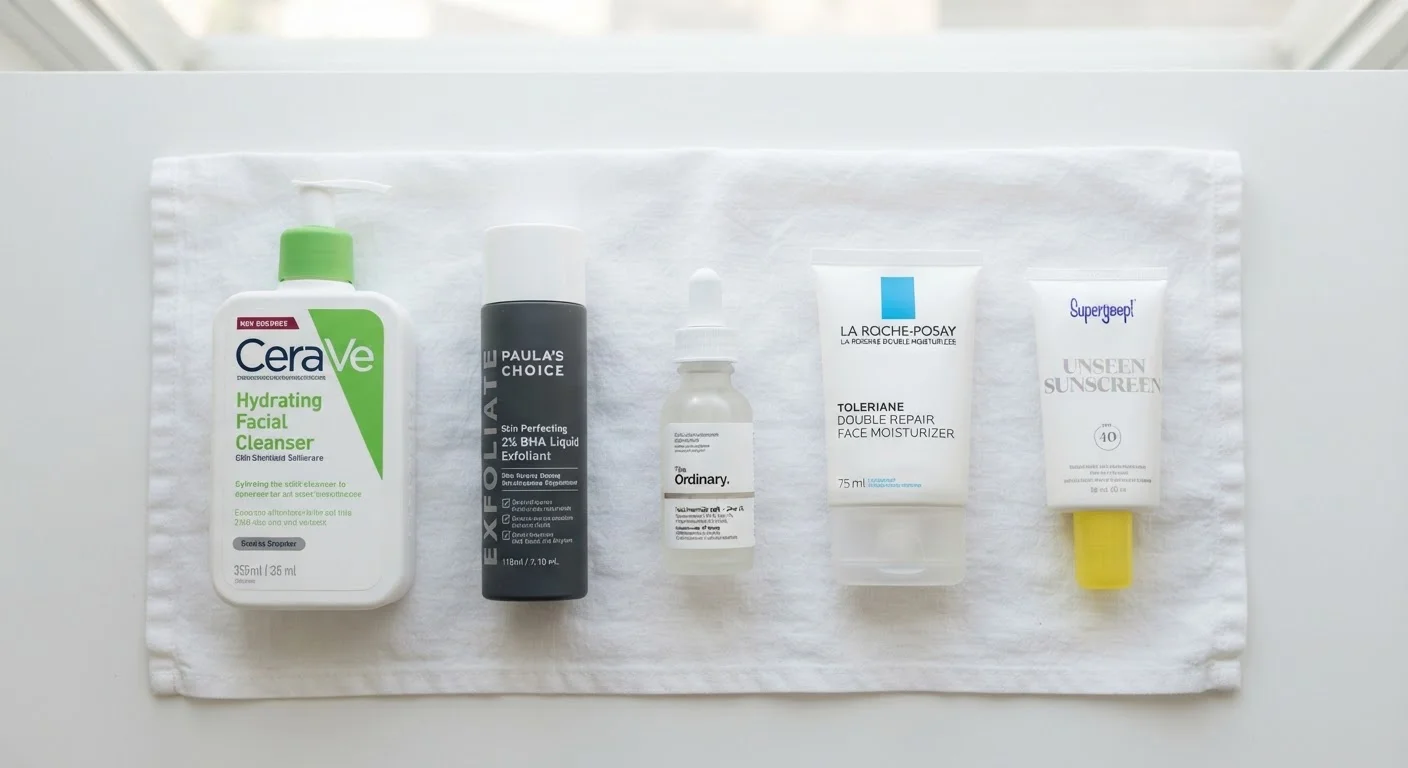
Work through the checklist groups below in order — they mirror the actual sequence of a routine, starting with preparation and finishing with sunscreen. Before you begin, pull out all the products in your current routine. The goal is to audit what you already have, not to add more steps.
Pay special attention to active ingredients. Vitamin C serums, chemical exfoliants (AHAs and BHAs), retinol, and niacinamide each have a specific place in the layering order, and some pairs shouldn't be used in the same routine at all. Our companion article on skincare ingredients that work well together is worth reviewing alongside this checklist if you're using multiple actives.
Your morning and evening routines also serve different purposes, which affects which products belong in each. Morning versus evening routine timing explains the reasoning in detail. For now, the checklist separates AM-specific steps (sunscreen) and PM-specific steps (retinol) clearly.
Small notepad or phone notes app
Record your current product order and compare it against this checklist to spot any sequencing mistakes.
Clean hand towel
Pat skin dry gently between cleansing and the rest of your routine without introducing bacteria.
Timer or phone clock
Set 30–60 second intervals between serum steps to ensure adequate absorption before layering the next product.
The Checklist
Use the groups below to audit or build your routine. Priority labels indicate which steps are essential for any routine (must), which are strongly recommended (should), and which add incremental benefit for those who want to go further (nice to have).
Before You Start
Step 1 — Cleanse
Step 2 — Toner or Essence (If Using)
Step 3 — Targeted Treatments and Serums
Step 4 — Moisturizer
Step 5 — Sunscreen (AM Only)
Retinol Goes PM — Never AM
Retinol degrades when exposed to sunlight and increases photosensitivity, making daytime use counterproductive and potentially irritating. Reserve retinol and retinoid products exclusively for your evening routine. Always follow with broad-spectrum sunscreen the next morning.
Skipping Sunscreen Undermines Everything Else
UV exposure is widely considered the leading external driver of premature skin aging and pigmentation. Applying actives like vitamin C or retinol without daily sun protection can reduce their effectiveness and undo results over time. Sunscreen is a non-negotiable final step every morning.
This article is for general informational purposes only and does not constitute medical or dermatological advice. If you have a skin condition, significant sensitivity, or are considering prescription-strength ingredients, consult a licensed dermatologist before making changes to your routine.
The content on this site is for informational purposes only and is not a substitute for professional advice. Always consult a qualified professional for guidance specific to your situation.