

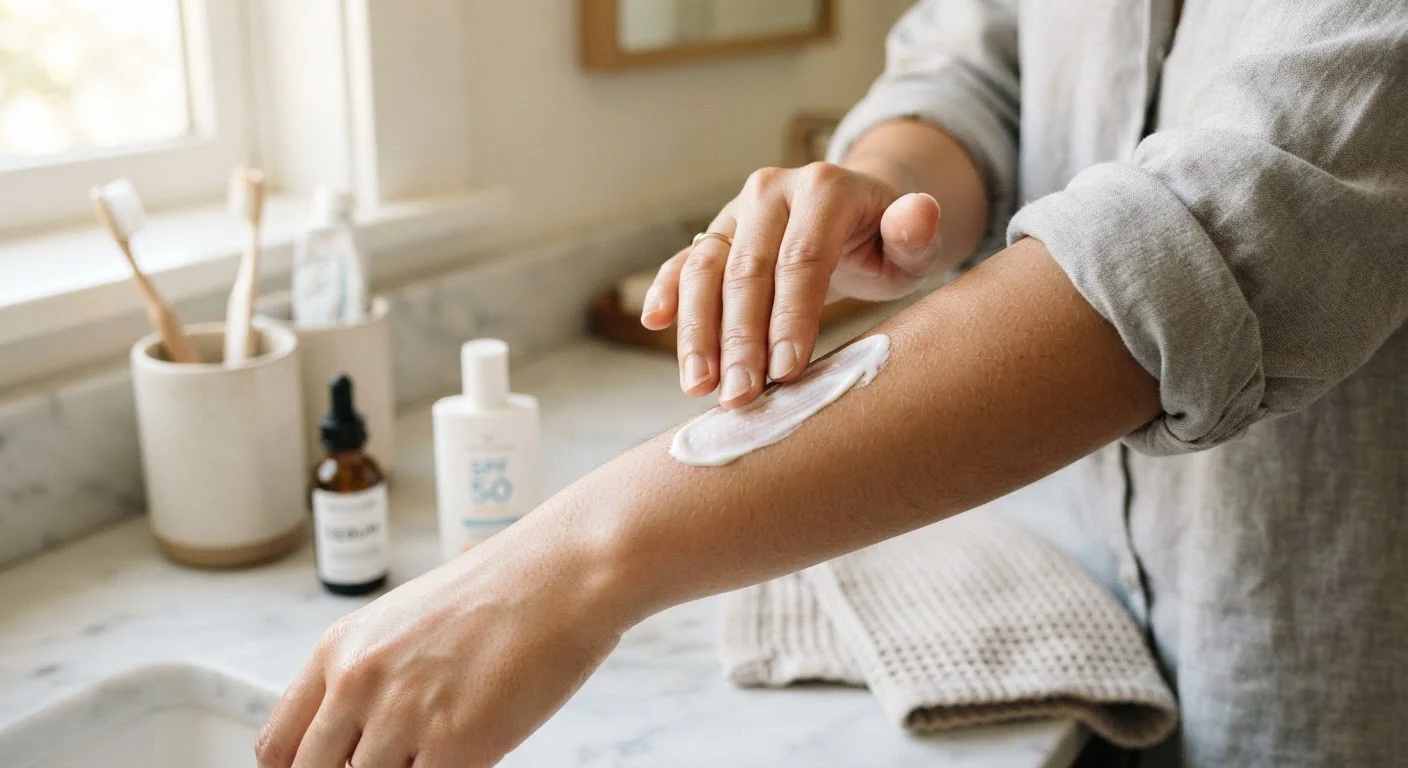
Why UV Exposure Is a Daily Event, Not a Summer Problem
Most Americans mentally file sunscreen alongside beach bags and pool days — something seasonal. That framing is one of the most consequential misunderstandings in everyday skincare. UV radiation is not a summer phenomenon; it is a year-round, daily exposure that accumulates invisibly over a lifetime.
The sun emits two types of ultraviolet radiation that reach the earth's surface: UVA and UVB. UVB rays vary in intensity by season and are strongest in summer — these are what cause visible sunburn. UVA rays, however, remain relatively constant throughout the year, penetrate cloud cover, and pass through standard glass windows. They reach the deeper layers of skin and are primarily responsible for collagen breakdown, hyperpigmentation, and the visible signs of premature aging. Importantly, neither type announces itself — you cannot feel UVA damage happening.
This is why dermatologists frame daily sunscreen not as a weather-dependent choice but as a baseline skin maintenance habit, similar to brushing your teeth. The damage is cumulative; what happens to skin at 25 shapes what it looks like at 45. See common skincare myths for more on why "I don't burn easily" is not a reliable measure of UV protection.
80%
UV rays that penetrate cloud cover
The American Academy of Dermatology notes that up to 80% of UV radiation reaches the skin even on cloudy days.
~97%
UVB rays blocked by SPF 30
SPF 30 broad-spectrum sunscreen filters approximately 97% of UVB rays under standard testing conditions.
#1
Most common cancer in the US
Skin cancer is the most frequently diagnosed cancer in the United States, according to the American Academy of Dermatology.
What the Evidence Actually Shows
Sunscreen's reputation isn't built on skincare marketing — it's backed by decades of clinical research. A frequently cited long-term Australian study published in the Annals of Internal Medicine found that adults who applied sunscreen daily showed significantly less skin aging than those who used it only occasionally, even after controlling for other lifestyle factors. Separate bodies of research consistently associate cumulative UV exposure with the majority of non-melanoma skin cancers.
The American Academy of Dermatology estimates that skin cancer is the most common cancer in the United States, with millions of cases diagnosed annually. Notably, a large proportion of those cases are considered highly preventable through behavioral habits including consistent sunscreen use.
It is also worth correcting one widespread misconception: sunscreen is not only for people who burn easily. Individuals with darker skin tones have a lower baseline risk from UVB-induced sunburn, but UVA damage — including hyperpigmentation and structural skin changes — occurs across all skin types. Dermatologists are unequivocal on this point.
“There is no such thing as a safe tan. A tan is skin's response to injury — it means UV radiation has already caused damage at the cellular level.”
— American Academy of Dermatology, Leading US professional body for board-certified dermatologists
How to Actually Use Sunscreen Effectively
SPF — Sun Protection Factor — measures how much UVB radiation a product filters relative to unprotected skin. An SPF 30 product blocks roughly 97% of UVB rays; SPF 50 blocks about 98%. The difference in numbers sounds dramatic; the difference in actual protection is modest. What matters far more is how sunscreen is applied.
SPF ratings are established using a standard 2 milligrams of product per square centimeter of skin — far more than the thin layer most people apply. Applying too little can cut effective protection substantially. For the face alone, a nickel-sized amount is a widely used practical guideline, though individual face sizes vary.
Key application habits worth building into your routine:
- Apply as the last step of your morning routine, after moisturizer and before makeup. This ensures the protective layer isn't diluted. See how to layer skincare products correctly for the full product order.
- Reapply every two hours during outdoor exposure, or after swimming or sweating.
- Don't skip ears, the back of the neck, or hands — frequently missed areas that also accumulate UV exposure.
- Use a broad-spectrum formula to ensure both UVA and UVB coverage.
Sunscreen fits naturally into a morning routine. For a full picture of how it anchors AM skincare, see why morning and evening routines differ.
Find a Formula You'll Actually Wear Daily
Consistency beats perfection every time with sunscreen. If a formula feels uncomfortable on your skin type — too heavy, too shiny, or leaving a white cast — try a different texture rather than skipping protection altogether. Gel formulas tend to suit oilier skin; cream-based options work well for dry skin. Tinted mineral sunscreens can double as light coverage for many skin tones.
Making Daily Sunscreen Stick as a Habit
The most effective sunscreen is the one you'll actually use every day. Texture, finish, and formulation matter for consistency — a formula that feels greasy or leaves a white cast is far more likely to be skipped. Fortunately, modern sunscreen formulations have diversified considerably: lightweight fluids, tinted options that work across a range of skin tones, mineral formulas (using zinc oxide or titanium dioxide) for sensitive skin, and chemical formulas that absorb invisibly are all widely available at accessible price points.
For anyone building or refining a skincare routine, sunscreen is not optional — it is foundational. As a functional skincare routine makes clear, a cleanser, moisturizer, and SPF cover the essentials for most people before any other product is worth considering.
Skin also changes with the seasons, and your sunscreen approach may need minor adjustments — a lighter formula in humid summer months, for example, or extra attention to reapplication during winter activities like skiing where UV reflection off snow is significant. Seasonal skincare adjustments can help you stay protected year-round without overhauling your entire routine.
The habit itself is simple. The payoff — in reduced skin cancer risk, slower skin aging, and more even skin tone over time — is as well-supported as any single intervention in dermatology.
This article is for general informational and educational purposes only and does not constitute medical or dermatological advice. Consult a qualified healthcare professional or board-certified dermatologist for guidance specific to your skin concerns or health history.
Frequently Asked Questions
Yes. Up to 80% of UV radiation can pass through cloud cover, according to the American Academy of Dermatology. Overcast skies reduce visible light but do not block the UV rays responsible for skin damage. Daily application regardless of weather is what dermatologists consistently recommend.
Most dermatologists recommend a minimum of SPF 30 for daily use, which blocks approximately 97% of UVB rays. SPF 50 offers marginal additional protection. The number matters less than consistent, correct application — most people apply far less than the amount SPF ratings are tested at.
No. While higher levels of melanin provide some natural protection, they do not eliminate UV damage. People of all skin tones can develop skin cancer, hyperpigmentation, and premature aging from sun exposure. Dermatologists recommend daily sunscreen for everyone regardless of complexion.
If you stay indoors all day away from windows, reapplication is generally not necessary. However, UVA rays penetrate standard window glass, so if you sit near a window for long periods, reapplication or UVA-protective window film is worth considering.
Sunscreen is the final step of any morning skincare routine, applied after moisturizer and before makeup if worn. Applying it last ensures the protective layer sits on top of the skin rather than being diluted by other products.
Products with combined SPF can contribute to protection, but the amount needed to reach the labeled SPF is typically far more than most people apply during makeup use. A dedicated sunscreen step offers more reliable coverage.
The content on this site is for informational purposes only and is not a substitute for professional advice. Always consult a qualified professional for guidance specific to your situation.