

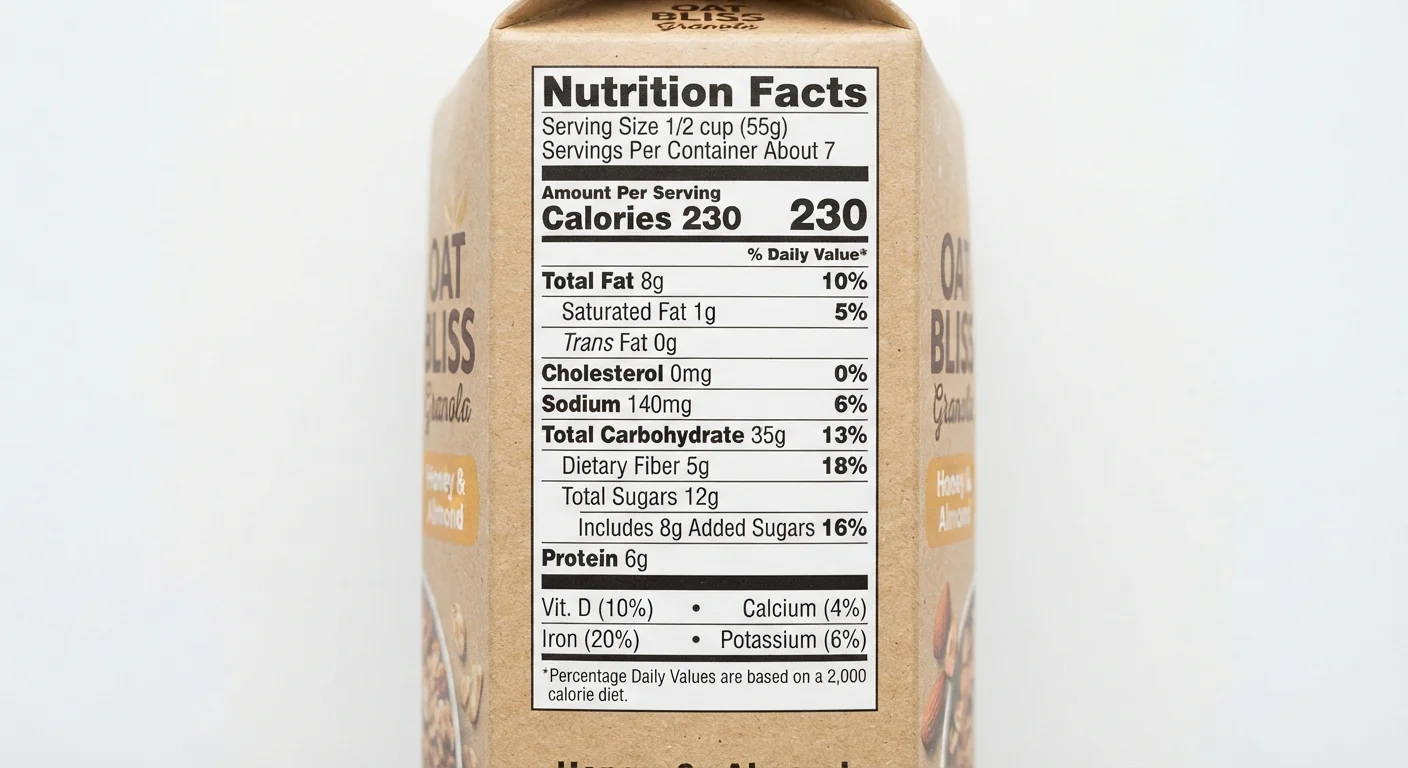
How the Nutrition Facts Panel Is Structured
The Nutrition Facts panel follows a standardized format regulated by the U.S. Food and Drug Administration (FDA). Every major packaged food sold in the United States must display one. Understanding its layout — top to bottom — is the fastest way to cut through food marketing and make informed choices at the grocery store.
The panel is divided into distinct zones, each carrying specific information:
- Serving information (top): serving size and servings per container
- Calories: prominently displayed in large type
- Nutrients to watch: total fat, saturated fat, trans fat, cholesterol, sodium, total carbohydrates, dietary fiber, total sugars, added sugars, and protein
- Vitamins and minerals: vitamin D, calcium, iron, and potassium are required
- % Daily Value footnote (bottom): explains the reference scale
For a deeper look at how labels communicate beyond just numbers, see our full guide to food labels from start to finish.
| Label Regulation Authority | U.S. Food and Drug Administration (FDA) |
| Most Recent Major Label Update | 2016 (phased in by 2020) (FDA Nutrition Facts Label Update) |
| Daily Sodium Limit (general adults) | 2,300 mg per day (2020–2025 USDA Dietary Guidelines) |
| Added Sugars Daily Cap | Less than 10% of daily calories (2020–2025 USDA Dietary Guidelines) |
| %DV Reference Calorie Level | 2,000 calories per day (FDA) |
| Required Vitamins & Minerals | Vitamin D, Calcium, Iron, Potassium (FDA Nutrition Facts Label Requirements) |
Row by Row: What Each Number Actually Means
Serving Size is the most important line on the label — everything else is calculated from it. The FDA requires serving sizes to reflect amounts people typically eat, not a recommended portion. If a bag lists 3 servings and you eat the whole bag, multiply every number by 3.
Calories measure the total energy one serving provides. This number draws from fat, carbohydrates, and protein combined.
Total Fat includes all dietary fats. The panel then breaks this into subcategories: saturated fat (linked to LDL cholesterol when consumed in excess) and trans fat (limit as much as possible — there is no safe daily threshold). Unsaturated fats, considered more heart-friendly, are not required to be listed separately but are implied by the difference.
Cholesterol is listed in milligrams. Dietary cholesterol guidance has evolved; current science suggests most healthy adults are more affected by saturated and trans fat intake than dietary cholesterol itself. Consult a healthcare provider for personalized guidance.
Sodium is listed in milligrams per serving. The 2020–2025 USDA Dietary Guidelines suggest limiting sodium to under 2,300 mg per day for most adults. Sodium accumulates quickly across multiple foods — see how sodium adds up faster than most people expect.
Total Carbohydrates includes three subcategories: dietary fiber (supports digestive health), total sugars (naturally occurring plus added), and added sugars — a line added in the FDA's 2016 label update. Added sugars are those introduced during processing, such as cane sugar or corn syrup; the Dietary Guidelines recommend keeping added sugars below 10% of daily calories.
Protein is listed in grams but does not carry a % Daily Value, because protein needs vary significantly by age, body size, and health status.
Vitamins and Minerals: the panel requires vitamin D, calcium, iron, and potassium — nutrients Americans commonly under-consume. A higher % Daily Value here is generally a positive indicator.
Serving Size
The standardized amount of food the label's nutrition data is based on. It reflects a typical eating amount as defined by the FDA — not necessarily a recommended portion.
% Daily Value (%DV)
A percentage showing how much one serving of a food contributes to the recommended daily intake of a given nutrient, based on a 2,000-calorie reference diet.
Added Sugars
Sugars and syrups added to a food during processing or preparation — separate from sugars naturally present in ingredients like fruit or milk.
Trans Fat
A type of unsaturated fat that has been artificially hydrogenated. Health authorities recommend limiting trans fat as much as possible due to its association with cardiovascular risk.
Saturated Fat
A type of fat found in animal products and some plant oils. Consuming it in excess is associated with elevated LDL cholesterol levels in some individuals.
Dietary Fiber
The indigestible portion of plant-based foods. It supports digestive health and is a nutrient most Americans do not consume in sufficient amounts.
Understanding % Daily Value and How to Use It
The % Daily Value (%DV) tells you how much of a nutrient one serving contributes toward a general daily reference amount, based on a 2,000-calorie diet. It is a comparison tool, not a prescription.
A simple rule of thumb established by the FDA:
- 5% DV or less = low in that nutrient
- 20% DV or more = high in that nutrient
Use %DV to quickly compare similar products side by side. For nutrients you want more of — fiber, vitamin D, calcium — look for higher %DV. For nutrients to limit — saturated fat, sodium, added sugars — look for lower %DV. Learn how to compare two packaged foods effectively using this framework.
Keep in mind that %DV is calibrated to 2,000 calories per day. If your caloric needs differ — which is common — the absolute gram or milligram amounts on the label are often more useful than the percentage.
This article is for general informational and educational purposes only and is not a substitute for professional medical or dietary advice. Consult a registered dietitian or qualified healthcare provider for guidance specific to your health needs.
The content on this site is for informational purposes only and is not a substitute for professional advice. Always consult a qualified professional for guidance specific to your situation.