

Why Our Built-In Sense of 'Enough' Gets Hijacked
Humans aren't naturally bad at estimating portions — we're just operating in an environment our instincts weren't designed for. For most of human history, food was less abundant and less engineered to override satiety. Today, supersized packaging, restaurant culture, and highly palatable processed foods have quietly redefined what a 'normal' amount looks like.
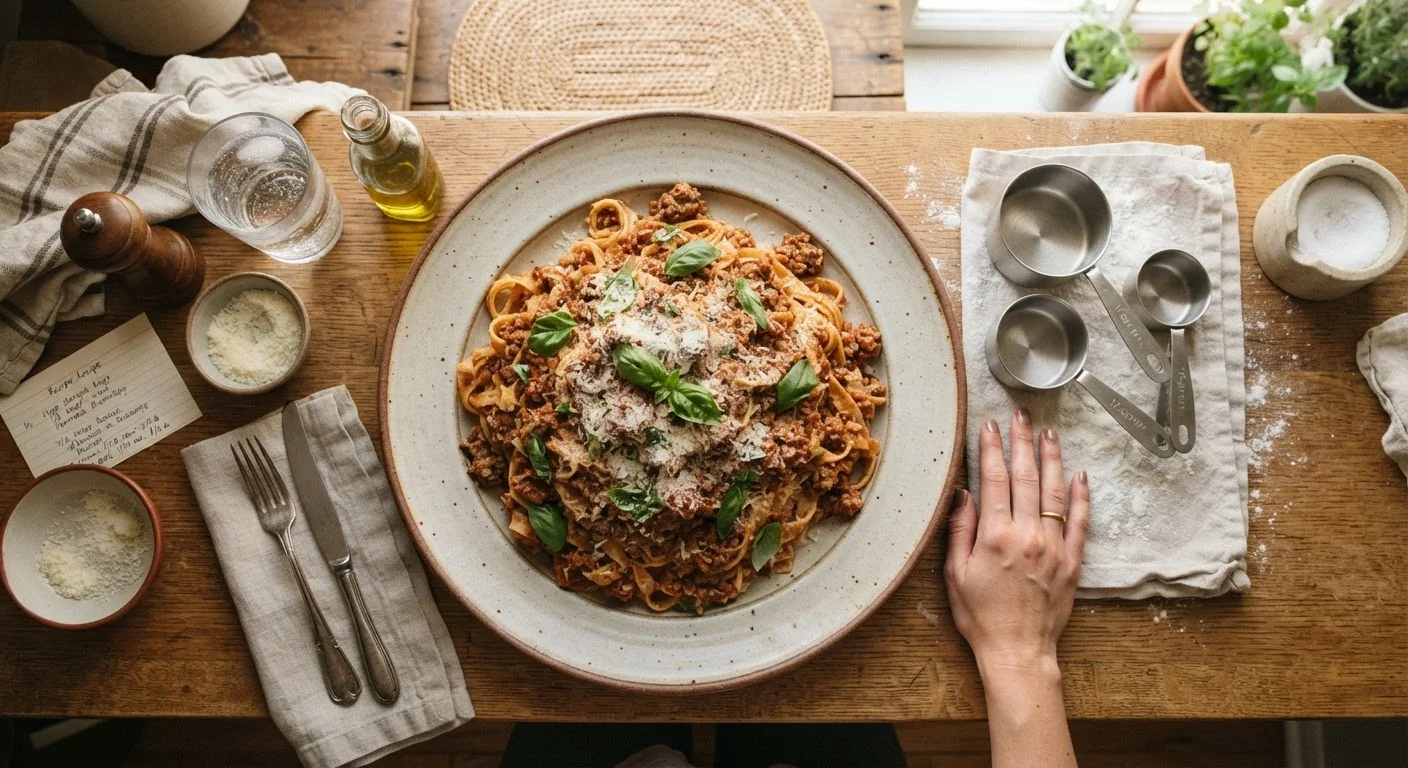
The problem isn't willpower or awareness. It's that our perceptual reference points have been calibrated by an environment that consistently overshoots. A 20-ounce soda, a pasta bowl that could double as a salad bowl, a 'snack bag' with three servings inside — these become the new baseline, and actual standard amounts start to look meager by comparison.
Recalibrating doesn't require obsessive tracking. It starts with understanding where our intuition breaks down and why. Learning to read a nutrition label accurately is one foundational step — it exposes the gap between what we assume a package contains and what it actually delivers.
Treating the restaurant plate as a standard portion.
Why it happens: Over decades, restaurant plate sizes have grown substantially, and we've come to associate a full plate with an appropriate meal. A single entrée can easily contain enough food for two or three standard servings.
Assuming the whole package is one serving.
Why it happens: Packaging is often sized for convenience, not for nutritional accuracy. A bag of chips or a bottle of juice can contain two, three, or even more servings, but the single-serving illusion is powerful when everything comes in one container.
Relying on visual estimates for calorie-dense foods.
Why it happens: Foods like nuts, oils, cheese, and nut butter are compact and don't look like much — but a tablespoon of olive oil and a tablespoon of water take up the same visual space while delivering very different amounts of energy.
Eating too fast to register fullness signals.
Why it happens: Satiety signals from the gut take roughly 15–20 minutes to reach the brain. Eating quickly means most people have already significantly overeaten before they feel full.
Letting plate and bowl size dictate how much to serve.
Why it happens: Research by nutrition scientist Brian Wansink (though some of his specific findings have been contested, the general plate-size effect has been replicated elsewhere) suggested people serve more food onto larger plates and eat most of what they serve. The container creates an implicit portion norm.
Ignoring context: eating distracted inflates intake.
Why it happens: When attention is on a screen or conversation, the brain encodes less of the meal as a 'complete eating event.' Studies consistently show distracted eaters consume more during the meal and feel less satisfied afterward.
Practical Tools to Rebuild Your Portion Sense
The most practical recalibration tool most people already own is their hand. A closed fist approximates one cup — reasonable for grains or vegetables. A palm (without fingers) is roughly three ounces of protein. A thumb tip is close to a teaspoon of fat. These aren't precise measurements, but they're consistently available and good enough for everyday meals.
Serving Size Is Not a Dietary Target
The serving size printed on a U.S. nutrition label reflects how much people typically eat in one sitting, not how much they should eat. This distinction matters enormously: if you eat twice the listed serving, every number on that label doubles. Always check servings per container before estimating your total intake.
For packaged foods, the nutrition label is your clearest guide — but only if you account for serving size correctly. Food packaging is designed to create impressions, and the serving size listed is often smaller than what most people actually eat in a sitting. Cross-referencing the label with how much you're actually putting on your plate is a habit worth building.
Portion Obsession Can Backfire
While understanding portions is genuinely useful, fixating on exact gram counts at every meal can contribute to anxiety around food and disordered eating patterns. The goal is informed awareness, not rigid control. If you find food-related stress is affecting your daily life, speaking with a registered dietitian or healthcare provider is a worthwhile step.
If you're planning meals for yourself or a smaller household, portion distortion compounds quickly when recipes are written for four to six people. Our guide on meal planning at smaller scales covers how to adapt standard recipes without waste or overproduction. And if you'd like a broader framework for structuring meals without rigid calorie counting, building a balanced plate visually offers a straightforward starting point.
This article is for general informational purposes only and does not constitute medical or dietary advice. For personalized guidance on nutrition, speak with a registered dietitian or qualified healthcare professional.
The content on this site is for informational purposes only and is not a substitute for professional advice. Always consult a qualified professional for guidance specific to your situation.