

Our Verdict
Mood-tracking apps offer a genuinely useful on-ramp to self-awareness, particularly for people who want a structured, low-effort way to notice emotional patterns over time. The benefits are real, but so are the risks of over-reliance, data privacy concerns, and the pressure that rigid daily logging can create. Used as one tool among several — not as a replacement for professional care — they can be a practical addition to a mental wellness routine.
Best for adults who are curious about their emotional patterns, comfortable with digital tools, and looking for a lightweight complement to — not a substitute for — broader mental health support.
What Mood-Tracking Apps Actually Do
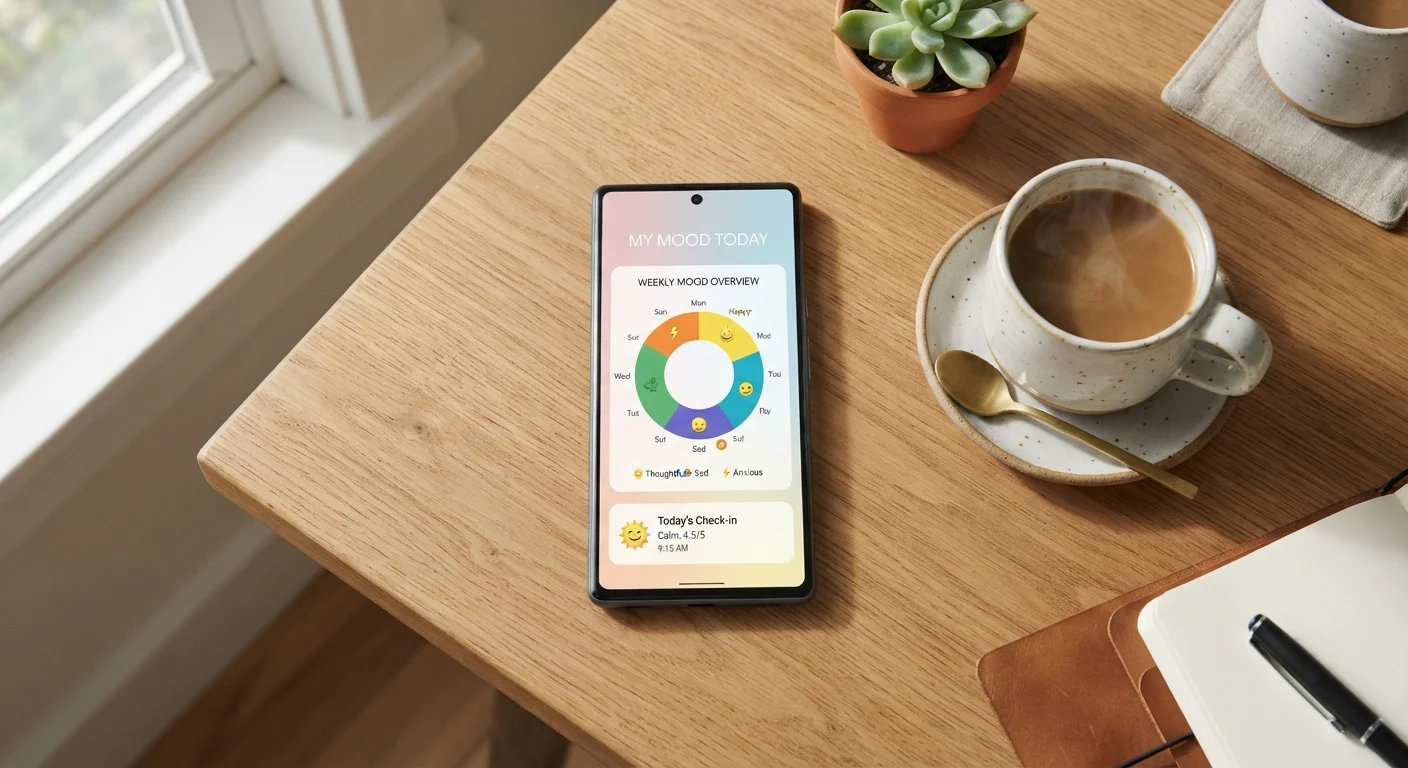
Mood-tracking apps are mobile tools that prompt you to log how you're feeling at set intervals — usually once or a few times a day. Most use a simple scale, emoji, or color system, and many let you tag contributing factors like sleep quality, exercise, or social contact. Over time, the app builds a visual record: charts, streaks, and trend lines that aim to surface patterns in your emotional life.
Some apps stay simple and journaling-focused. Others integrate with wearables, offer guided reflections, or flag patterns worth discussing with a clinician. For a broader look at how these tools compare to professional therapy and peer support, see what each type of mental wellness support can realistically provide.
The appeal is straightforward: feelings are fleeting and often hard to articulate, and a daily log creates a record that memory alone rarely does.
The Real Benefits of Logging Your Mood
Reveals emotional patterns invisible to unaided memory
A consistent log surfaces connections between mood, sleep, activity, and life events that are easy to overlook day-to-day. Seeing a month of data at once often highlights triggers that felt random in the moment.
Gives clinicians concrete data to work with
Sharing a mood chart with a therapist or doctor provides an objective record rather than a reconstructed narrative. This can make sessions more efficient and help identify trends worth exploring.
Builds a lightweight emotional self-awareness habit
Even a brief daily check-in encourages a moment of intentional reflection. Over time, this practice can improve emotional literacy — the ability to name and understand what you're feeling.
Low barrier to entry for mental wellness routines
For people who find journaling or meditation hard to sustain, a quick mood rating is an accessible alternative that still creates a meaningful record.
The strongest case for mood-tracking is pattern recognition. Many people are surprised to discover that their lowest moods cluster around specific days, situations, or habits — insights that are nearly impossible to spot without a record. That data can be genuinely useful when talking to a therapist or doctor, giving a professional a concrete picture rather than a vague recollection.
Regular check-ins also encourage a habit of emotional self-awareness. Even pausing for 30 seconds to rate your mood can interrupt automatic thinking and prompt a moment of reflection. For a complementary low-effort practice, the weekly mental wellness check-in covers sleep, stress, and connection alongside mood.
The Drawbacks Worth Knowing Before You Start
Consistency is hard to sustain long-term
Research on habit formation suggests that digital self-monitoring tools see significant drop-off within the first few weeks. Gaps in the data reduce its usefulness and can discourage continued use.
May increase anxiety through over-monitoring
Frequent self-evaluation can shift attention toward emotional fluctuations that would otherwise pass unnoticed. For people prone to health anxiety or rumination, this scrutiny can amplify distress rather than resolve it.
Privacy protections for mood data are inconsistent
Unlike healthcare providers, many wellness apps are not bound by the same regulatory standards for sensitive data. Users may not realize their mood logs could be shared with advertisers or third-party partners.
Ratings can oversimplify complex emotional states
Reducing a day's emotional experience to a single number or color risks flattening nuance. Emotions are rarely uniform across a day, and a reductive scale can create a misleading sense of clarity.
Not a substitute for professional mental health support
Mood-tracking tools are self-care aids, not clinical interventions. Relying on an app instead of seeking therapy or medical evaluation when needed can delay appropriate care.
The most common reason mood-tracking stops working is the same reason most tracking habits falter: consistency is hard to maintain. A few missed days can break a streak and lead people to abandon the practice entirely, which means the data gaps compound over time.
There's also a subtler risk: over-scrutinizing your emotional state can heighten anxiety rather than reduce it. For some people, being prompted to evaluate their mood multiple times a day amplifies distress rather than creating clarity. If you've found journaling helpful as an alternative, it's worth reading about what the research actually supports around journaling for mental health.
Privacy and Data: What You Should Check
Mood Apps Are Not Mental Health Treatment
No mood-tracking app — however sophisticated — constitutes mental health diagnosis or treatment. These tools are designed for general self-awareness and personal reflection. If you notice persistent low mood, significant anxiety, or other concerning changes in your mental health, please reach out to a licensed mental health professional. Apps can complement professional care, but they are not a replacement for it.
Before downloading any mood-tracking app, review its privacy policy. Mood data is sensitive health information, and not all apps treat it that way. Key questions to ask: Does the app sell or share data with third parties? Is your data stored locally or on external servers? Can you export or delete your records?
Regulatory protections for mental wellness app data vary and are often less robust than those covering traditional healthcare providers. Knowing where your data goes is a practical step, not a paranoid one — the same principle applies to any digital tool that collects personal information, as explored in the comparison of digital vs. hand-tracking methods for spending.
How to Get the Most Out of Mood Tracking
Start with one log per day at a consistent time — many people choose morning or evening. Treat it as a light checkpoint rather than a performance. Apps that allow brief notes alongside a rating tend to produce more useful data than number-only logs, because context is what transforms a data point into a meaningful observation.
Set a realistic trial period — four to six weeks is enough to see whether patterns emerge and whether the habit fits your life. If digital logging feels like an obligation you resent, a simple paper-based approach may suit your style better. And always remember: mood data is a conversation starter, not a diagnosis. Share patterns with a qualified mental health professional if you notice persistent changes you're concerned about.
This article is for general informational and educational purposes only and is not a substitute for professional mental health advice, diagnosis, or treatment. If you are experiencing significant emotional distress, please consult a qualified healthcare professional.
The content on this site is for informational purposes only and is not a substitute for professional advice. Always consult a qualified professional for guidance specific to your situation.