

The Routes Worth Knowing
America's highway network is vast, but a handful of drives have earned legendary status — each with its own personality, scenery, and sense of place. Whether you're a first-timer mapping out your first multi-day adventure or a seasoned traveler filling in gaps on the map, knowing what sets these routes apart is the foundation of a great trip. If you're just getting started, our beginner's guide to long-distance road trips covers the essentials before you hit the road.
Below is a route-by-route breakdown of what makes each drive distinctive — scenery, length, driving character, and who it tends to appeal to most.
Route 66: The Mother Road
Stretches: Chicago, IL to Santa Monica, CA — roughly 2,400 miles across eight states.
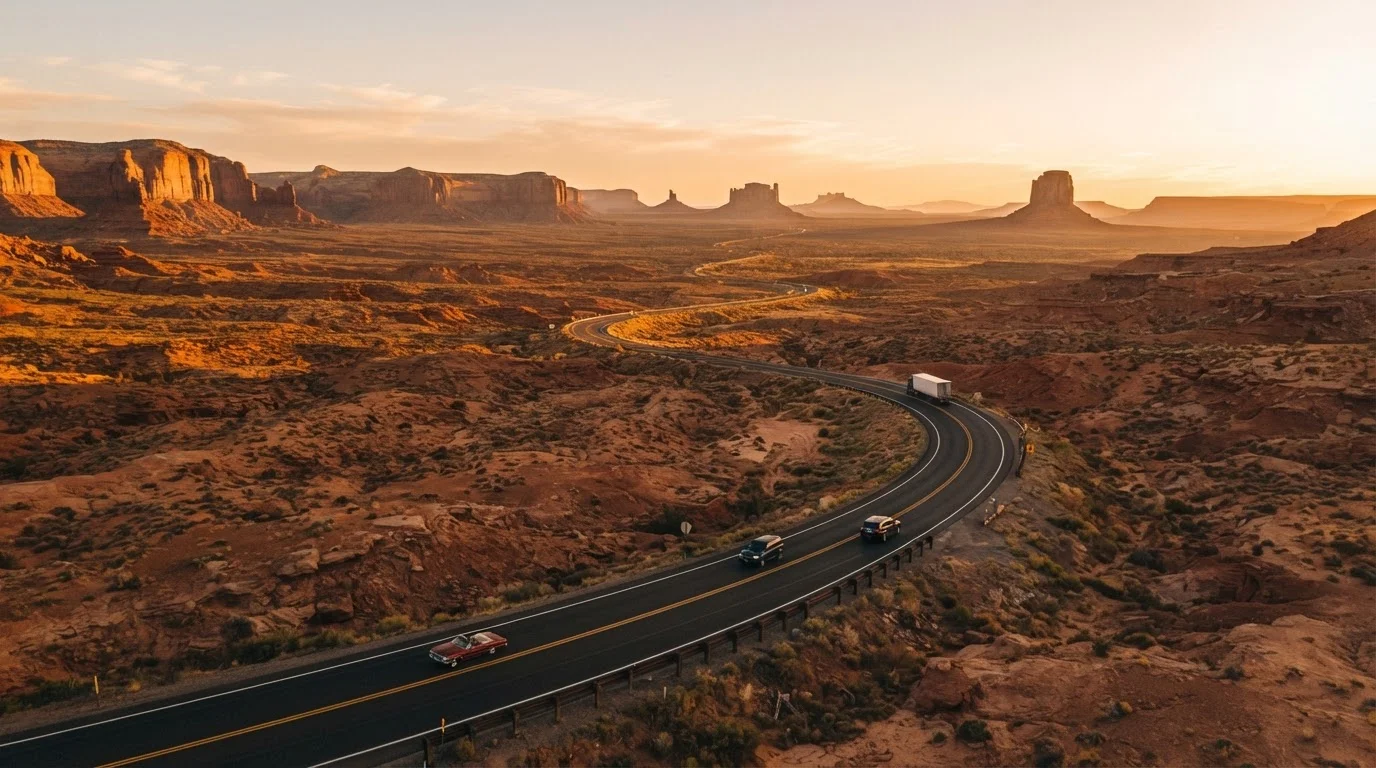
Route 66 is less a single road than a time capsule. Established in 1926, it stitched together the American Midwest and Southwest before interstates made it largely obsolete. What remains is a patchwork of original alignments, neon-lit diners, quirky roadside attractions, and desert ghost towns. The driving character is varied: long flat stretches through Oklahoma and the Texas Panhandle give way to red rock canyon country in Arizona and New Mexico.
Who it suits: Travelers who value Americana, nostalgia, and unhurried exploration. Not ideal for anyone looking for dramatic natural scenery without human history layered in. For a side-by-side comparison with another icon, see Route 66 vs. the Blue Ridge Parkway.
The Blue Ridge Parkway: America's Favorite Scenic Drive
Stretches: Shenandoah National Park, VA to Great Smoky Mountains National Park, NC — 469 miles, no commercial trucks, no billboards, no stoplights.
Managed by the National Park Service, the Parkway runs along the Appalachian ridge and was built specifically for recreational driving. It is one of the most visited units in the entire National Park System. Elevation changes are constant — you'll crest above 6,000 feet in places — and overlooks appear every few miles. Fall foliage (typically peaking October–early November in the northern sections) draws enormous crowds, so plan ahead if that's your goal.
Who it suits: Nature-focused travelers, hikers, cyclists, and anyone who prefers quiet, car-free scenery to traffic. The 45 mph speed limit is enforced and intentional — this is not a route for drivers in a hurry.
Parkway Access and Vehicle Considerations
The Blue Ridge Parkway has no entry fee, but some facilities and campgrounds along the route do charge. Certain sections may be closed seasonally due to weather or maintenance — the NPS Blue Ridge Parkway website publishes real-time closure information. Large RVs and trailers should check tunnel and road clearance restrictions before planning their route.
Pacific Coast Highway, the Going-to-the-Sun Road, and Beyond
Pacific Coast Highway (CA-1): The section between San Luis Obispo and Leggett, CA offers roughly 400 miles of ocean-cliff driving. Conditions vary significantly by season — portions are subject to mudslides and closures, so checking Caltrans advisories before departure is essential. For how seasonality affects major drives across the country, our guide on timing seasonal road trips is worth reading before you go.
Going-to-the-Sun Road (MT): A 50-mile engineering marvel through Glacier National Park. Open typically from late June to mid-October depending on snowpack. Vehicle size restrictions apply to the central alpine section — check the National Park Service site before you plan. This is one of several national parks that anchor their own road trip corridors, explored in our guide to national parks along road trip routes.
The Overseas Highway (US-1, FL): 113 miles of bridges and causeways linking the Florida Keys to Key West. Flat, exposed, and unlike anything else in the continental US — the drama here is all about water, not elevation.
The content on this site is for informational purposes only and is not a substitute for professional advice. Always consult a qualified professional for guidance specific to your situation.