

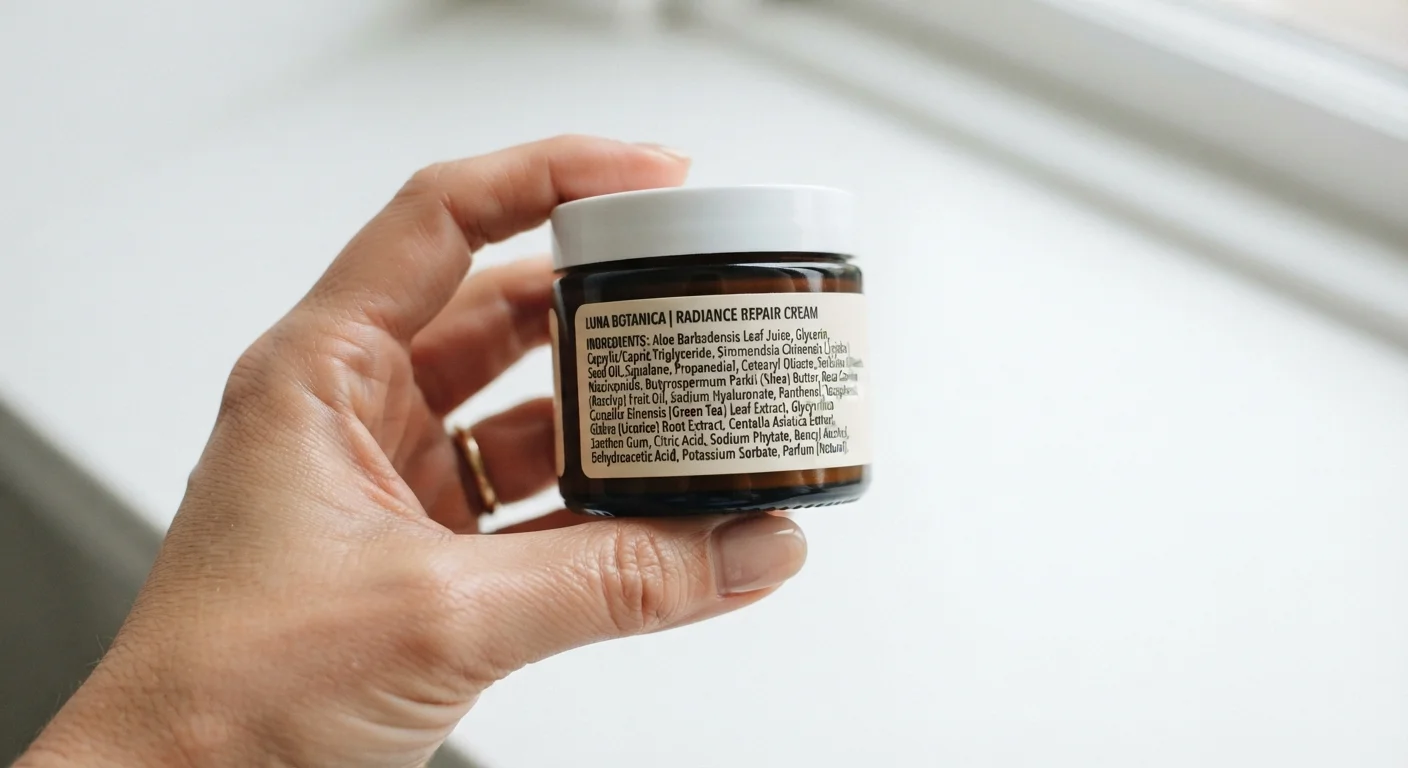
Why the Ingredient List Is the Only Part That Matters
The front of a skincare product is pure marketing. Words like "natural," "clean," "brightening," or "anti-aging" carry no standardized legal definition in the U.S. cosmetics industry. The back label — specifically the ingredient declaration — is the only section required by the FDA to follow consistent rules.
In the U.S., cosmetic ingredient lists must comply with the International Nomenclature of Cosmetic Ingredients (INCI) system. This means each ingredient is listed under its standardized scientific name, which is why you'll see "tocopherol" instead of "vitamin E" or "ascorbic acid" instead of "vitamin C." These are not red flags — they're the regulated, precise names for ingredients you likely already recognize.
Once you understand how the list is structured, you can cut through any amount of packaging noise and evaluate a product on its actual contents. This pairs directly with building a routine that works — see what a functional routine actually needs before loading up on products you may not need.
The 1% Threshold Is Your Key Insight
Once you know that ingredients below 1% concentration can be listed in any order, you can interpret label order more accurately. Manufacturers sometimes place a desirable-sounding ingredient just ahead of preservatives — even if it's present at a fraction of a percent. Looking at where the preservatives start gives you a rough marker for where the sub-1% zone begins.
The Concentration Rule: Order Is Everything
The single most important rule: ingredients are listed from highest to lowest concentration by weight. The ingredient at the top of the list makes up the largest proportion of the product; the ingredient at the bottom is present in the smallest amount.
In practice, this means the first five to seven ingredients typically account for the bulk of a formula. If "hyaluronic acid" appears 22nd on a 25-item list, it's present in a very small amount — possibly less than 0.1%. That doesn't automatically make a product ineffective, but it should recalibrate your expectations.
There is one important exception: ingredients present at concentrations of 1% or below can be listed in any order after the higher-concentration ingredients. Manufacturers frequently place appealing active ingredients just above the preservatives and colorants at the end of the list, even if those actives are at trace levels. This is legal, and it's why a product can truthfully say it "contains niacinamide" while listing it 28th out of 30 ingredients.
For a deeper look at how this same ordering principle applies to food products, ingredient lists follow rules most shoppers don't know about — the logic translates directly.
Ingredients Worth Knowing by Name
You don't need to memorize 200 ingredient names. Focus on a handful of functional categories:
- Humectants (draw moisture in): glycerin, hyaluronic acid, urea, propylene glycol
- Emollients (soften and smooth): squalane, jojoba oil, shea butter, dimethicone
- Occlusives (seal moisture in): petrolatum, beeswax, lanolin, cetyl alcohol
- Actives (target specific concerns): retinol, niacinamide, ascorbic acid (vitamin C), azelaic acid, salicylic acid, glycolic acid
- Preservatives (prevent microbial growth): phenoxyethanol, sodium benzoate, ethylhexylglycerin — necessary and generally safe at regulated levels
Actives are where most people want to focus their attention, since these are the ingredients with the strongest evidence for changing how skin looks or behaves over time. Our plain-language map of active ingredients can help you match specific concerns to the right ingredients. If you're curious about one of the most studied actives specifically, retinol explained in plain terms is a good starting point.
"Free From" Claims Are Unregulated
Labels stating "paraben-free," "sulfate-free," or "fragrance-free" are not independently verified by any government body for cosmetics in the U.S. "Fragrance-free" should mean no added fragrance, but some products still contain masking fragrances not declared as such. Reading the full ingredient list remains the most reliable way to verify these claims yourself.
What to Watch for If You Have Sensitive Skin
For anyone prone to redness, stinging, or breakouts, a few categories deserve extra attention on any new product's label:
- Fragrance (parfum): Listed as a single ingredient despite potentially representing dozens of individual compounds. It's one of the most common causes of contact dermatitis. Both synthetic and "natural" fragrances carry risk for sensitive skin.
- Essential oils: Lavender, eucalyptus, citrus oils, and others can be irritating despite their natural origin. "Natural" does not mean non-reactive.
- Alcohol denat. (denatured alcohol): A drying, potentially irritating solvent found in some toners and lightweight serums. It's distinct from the fatty alcohols (like cetyl or stearyl alcohol), which are actually skin-conditioning.
- High-concentration exfoliating acids: Glycolic, salicylic, or lactic acid high on an ingredient list signals a potent formula that may require patch testing.
If you're building a routine around products you've vetted by label, layer them correctly — applying in the wrong order can reduce efficacy. layering skincare products in the right order walks through exactly how to sequence what you use.
This article is for general informational purposes only and is not a substitute for advice from a qualified dermatologist or healthcare professional. If you experience persistent skin reactions, consult a board-certified dermatologist.
The content on this site is for informational purposes only and is not a substitute for professional advice. Always consult a qualified professional for guidance specific to your situation.