

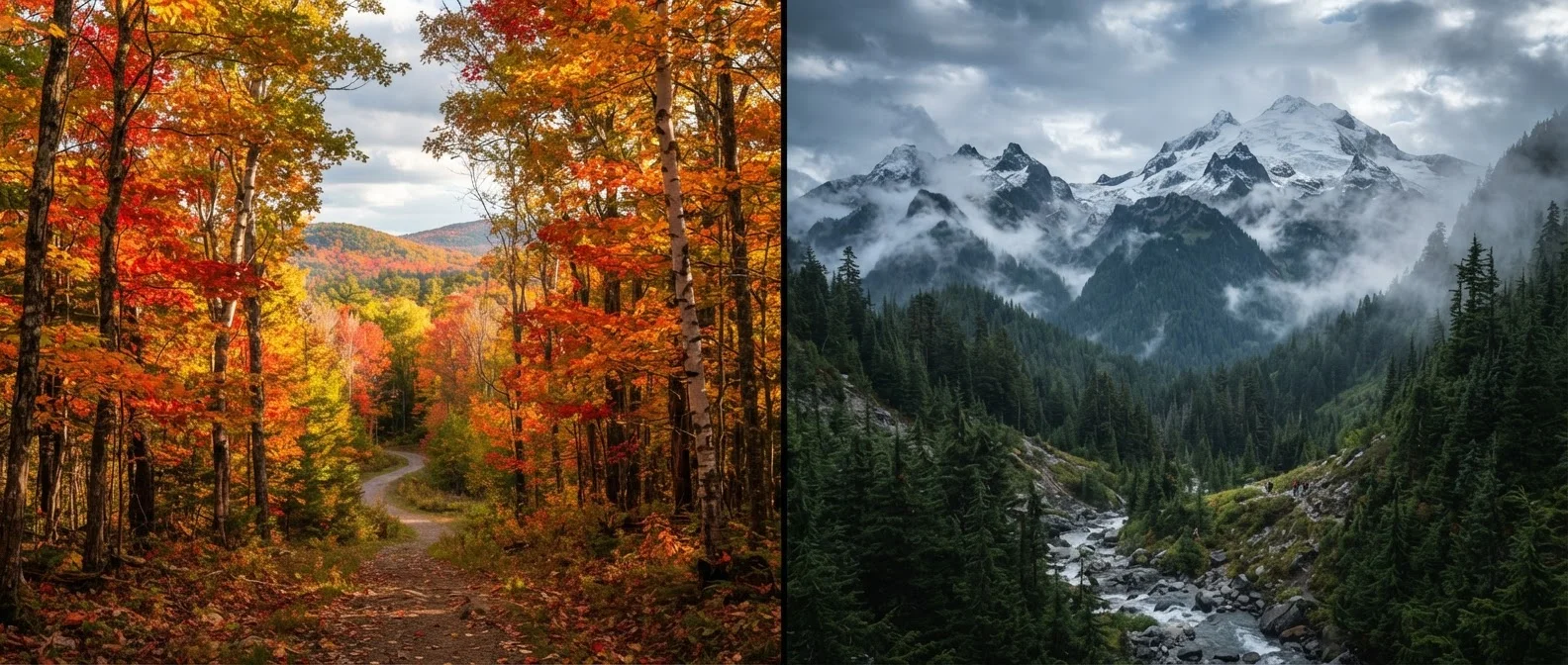
Our Verdict
Both drives are genuinely world-class experiences, but they cater to different travel styles. New England's foliage route wraps scenic color in charming small-town culture, easy logistics, and reliable amenities. The Cascade Loop trades that coziness for dramatic mountain wilderness and a sense of true discovery. Neither is objectively superior — your ideal pick depends on what kind of road tripper you are.
| Best for | Recommended |
|---|---|
| First-time road trippers or those who prefer frequent towns and services | New England Fall Foliage Drive |
| Outdoor enthusiasts craving mountain drama and off-the-beaten-path stretches | Pacific Northwest Cascade Loop |
| Travelers based on the East Coast seeking a shorter trip from home | New England Fall Foliage Drive |
| Those wanting to combine alpine scenery with fall color in one drive | Pacific Northwest Cascade Loop |
The Routes at a Glance
The classic New England Fall Foliage Drive typically traces a loop through Vermont, New Hampshire, and Maine — passing covered bridges, white-steeple villages, and hills drenched in color. Most travelers anchor it around Vermont's Route 100 corridor and the Kancamagus Highway in New Hampshire, a 34-mile stretch through White Mountain National Forest that consistently dazzles.
The Pacific Northwest Cascade Loop is a designated scenic byway in Washington State — a roughly 440-mile circuit that sweeps east over Stevens Pass, down through the Wenatchee Valley wine country, north past the apple orchards of Chelan, and back west through the jaw-dropping North Cascades. It's officially mapped by the Cascade Loop Association and includes Highway 2 and Highway 20 as its backbone.
Both are part of the broader universe of America's classic road trip routes that have earned their reputations honestly.
Scenery and Visual Experience
New England's autumn palette is legendary for good reason. Maples, birches, and beeches ignite simultaneously across rolling hills, and at peak color the landscape feels almost impossibly vivid. You're rarely far from a picture-perfect moment — a red barn, a mirror lake, a steepled church framed in orange and gold.
The Cascade Loop offers something different: scale. The North Cascades are raw and vertical, with glacier-capped peaks rising sharply above valleys. Fall color here comes from larches turning golden at elevation, mixed with the deep permanent green of Douglas firs. The effect is more dramatic and austere than New England's warmth — think bold contrasts rather than all-over glow.
| New England Foliage Drive | Cascade Loop (WA) | |
|---|---|---|
| Peak timing | Late Sept – mid-October | Late Sept – mid-October |
| Approximate distance | 300–500 miles (varies by route) | ~440 miles |
| Dominant scenery | Maple-covered hills, villages | Alpine peaks, larches, valleys |
| Town frequency | High — services every 10–20 miles | Moderate — longer gaps in mountains |
| Weather risk | Rain likely; roads stay open | Early snow can close passes |
| Best for | First-timers, families, comfort seekers | Outdoorsy, self-sufficient travelers |
For those already fans of dramatic coastal scenery, this Pacific Coast Highway overview offers useful context on what West Coast driving looks and feels like.
Timing, Weather, and Road Conditions
In New England, foliage typically peaks from late September in northern Vermont and Maine, rolling southward through mid-October. The window is real but forgiving — most of the region puts on a show for three to four weeks. Rain is common but rarely disruptive, and roads remain fully accessible through October.
The Cascade Loop's timing is tighter. Highway 20 (North Cascades Highway) closes for winter — usually by mid-November but sometimes earlier after early snowfall. The sweet spot for golden larches and open mountain passes is late September to mid-October. A late storm can shut things down faster than expected.
Book Accommodations Early for Peak Weeks
Both routes see high demand during peak foliage weeks — typically the first two weeks of October. Lodging in popular towns like Stowe, VT, or Leavenworth, WA, can fill up months in advance. Booking 2–3 months ahead gives you the most flexibility on dates and lodging type. Midweek travel also tends to mean lighter traffic and easier parking at popular viewpoints.
Understanding how regional climate patterns affect your planning is covered thoroughly in this guide to timing seasonal drives — worth a read before you book.
Logistics, Amenities, and Traveler Experience
New England wins on infrastructure. Towns like Stowe, Vermont, Woodstock, and North Conway, New Hampshire, are built for visitors — with inns, restaurants, and leaf-peeping infrastructure well established. Gas stations are never far, and cell service is generally reliable. It's an accessible, comfortable trip for families, couples, or solo travelers new to road tripping.
The Cascade Loop has longer gaps between towns, particularly along Highway 20 through the North Cascades. Cell service drops in mountain stretches. That said, anchor towns like Leavenworth (a Bavarian-themed village worth the quirk), Winthrop, and Chelan offer genuine charm and services. For travelers who enjoy a little self-sufficiency, those stretches feel like earned solitude rather than inconvenience.
Both routes sit near national park assets worth building into your itinerary — see this guide to national parks along road trip corridors for ideas. And if comparing iconic American drives is your thing, the Route 66 vs. Blue Ridge Parkway comparison is another great resource.
The content on this site is for informational purposes only and is not a substitute for professional advice. Always consult a qualified professional for guidance specific to your situation.